
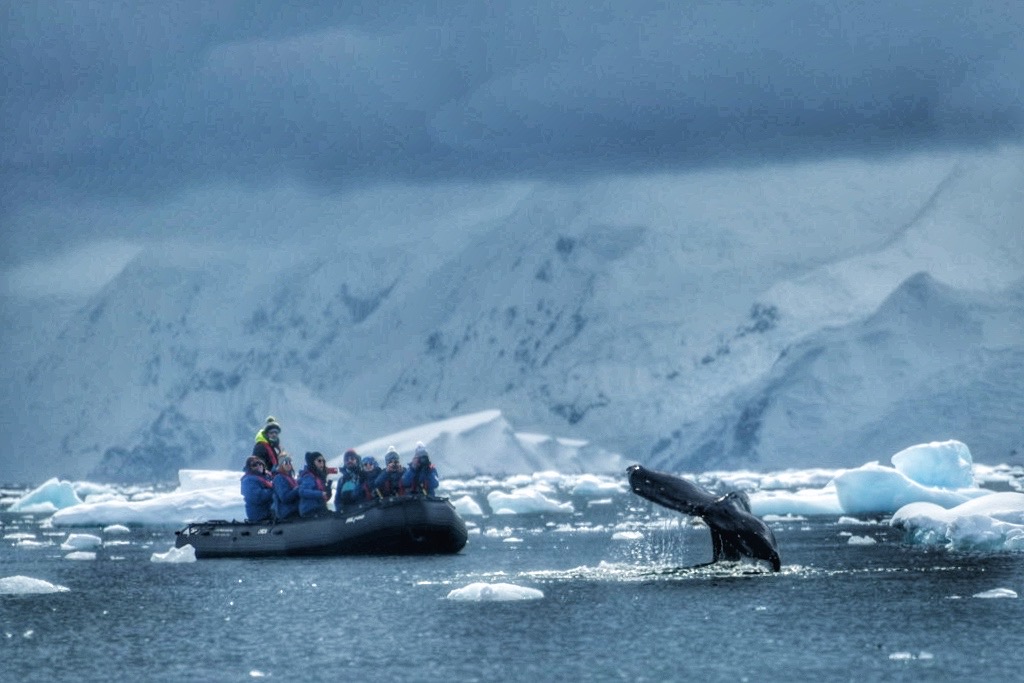
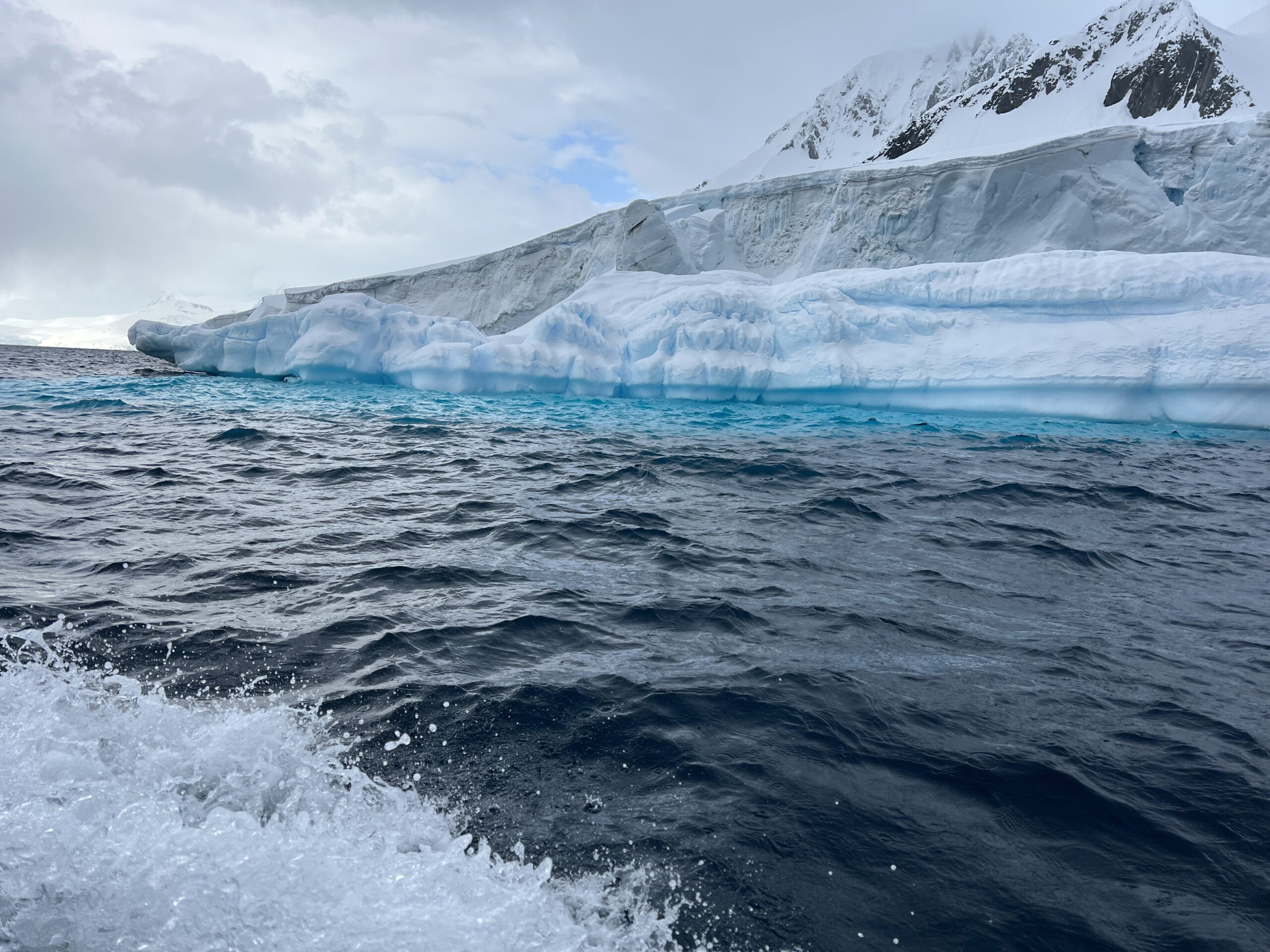
In the middle of Fournier Bay, Antarctica, amid wobbling glaciers and crackling ice, the only sound interrupting the silence once the zodiac’s engines turned off, we saw a breaching humpback whale. She was massive, feeding on krill and dancing in the way that these enormous mammals do, fashionably showing off her tail as it slapped the surface of the bay, revealing her imperfections.
Two parts of her tail were cut off, probably by fishing nets, our guide Phil mentioned. This meant that her journey—from Tonga and Latin America where humpbacks normally breed, to Antarctica where they feed—was probably far less efficient and much harder to achieve.
With no strict sanctions in place to prevent whaling, fishermen in countries like Japan, Norway, and Greenland continue the practice despite international laws designed to protect these creatures.
Whale consumption in Japan increased after World War II when people were dying of starvation, which is why it remains more prevalent among older generations than younger ones. As the whale continued to dance around us, Phil explained that the Japanese government, viewing whaling as a facet of cultural heritage, has advocated for introducing whale meat in school meals. According to him, children generally don’t like the taste of whale: indeed, it it takes a long time for them to acquire it.
This moment in the middle of the open water, thousands of miles from home, highlighted the importance of school meals as a means of promoting culture while balancing human and planetary health. In that instance, all my interests as a sustainability advocate converged.
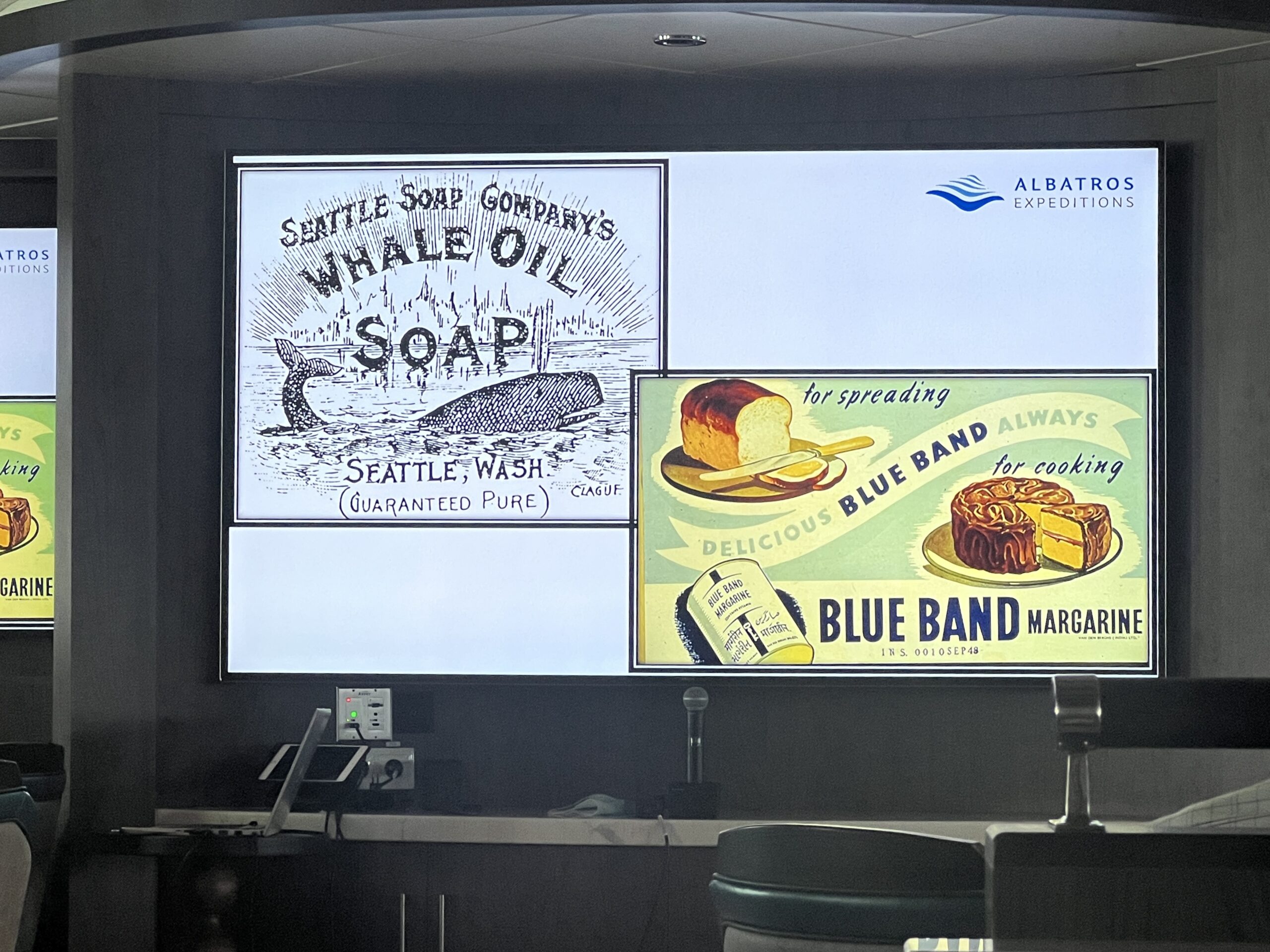
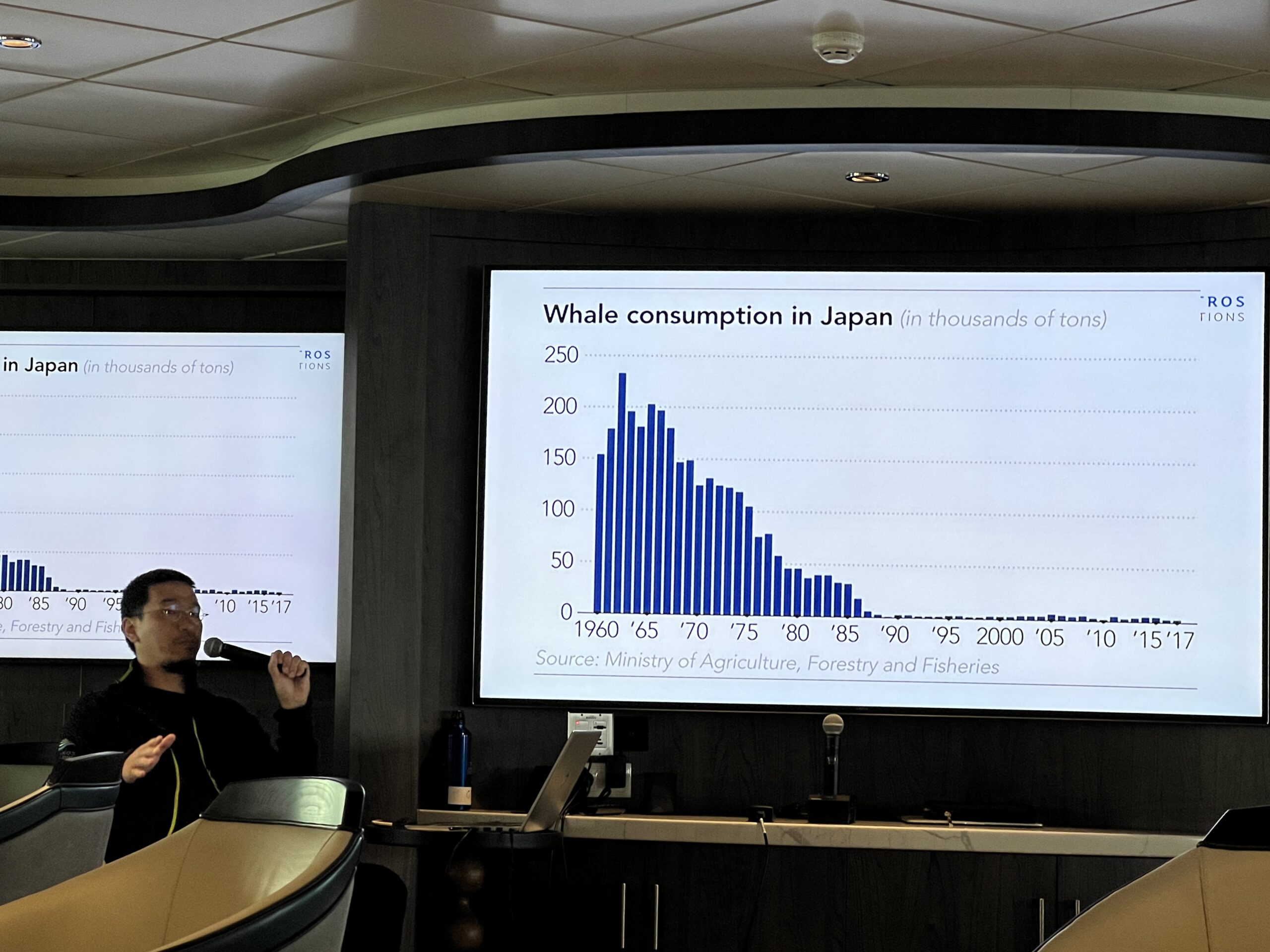
It reminded me of a documentary about the Faroe Islands that presented the battle between culture and human health as it relates to whale consumption. Whales are at the top of the food chain, accumulating mercury, microplastics, and persistent organic pollutants (POPs), which we then ingest when we eat them. Yet indigenous communities in the Faroe Islands have been eating whale for centuries. How do we balance this cultural and historical connection against current-day human and planetary needs?
Back on the ship, we learned that although humans are often said to be the only species capable of developing culture through language and community, whales sing too. And the data shows that their songs have shifted dramatically since the 1970s. If animals can adapt their behaviors to survive, what might we learn from them about reshaping our own culture?
In that moment, as I found myself advocating for a convergence of cultural respect with human and planetary health in the food system, all my worlds seemed to align. It felt as though the universe was speaking through that whale, on that boat, nudging me toward a deeper journey—maybe not to Antarctica, but into depths of a different kind.
Thank you for reading this story. I’d love to hear your thoughts, and I look forward to having you be a part of what comes next.
With gratitude,
Earlene
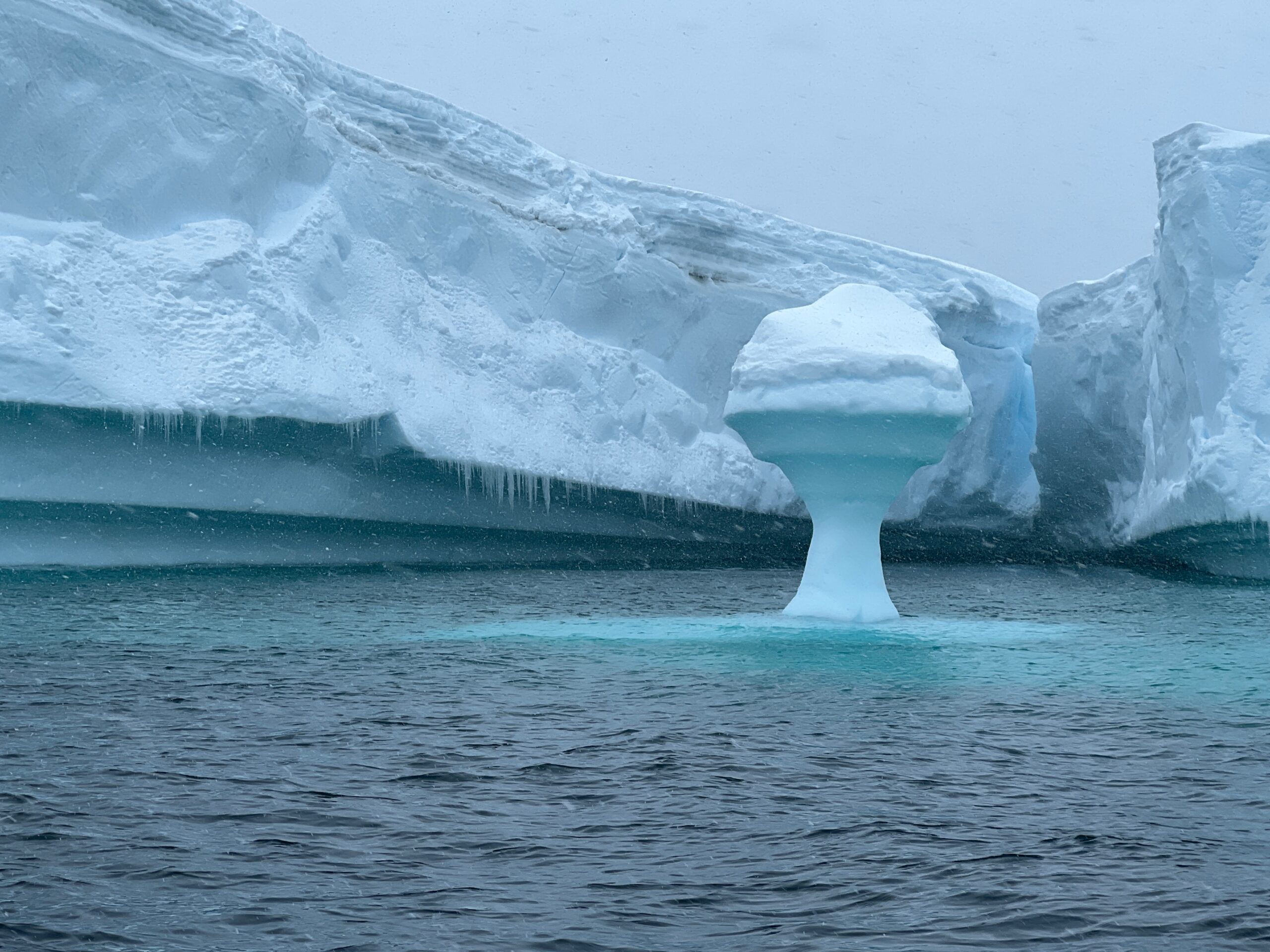
Don’t these look like ice cream cones?!
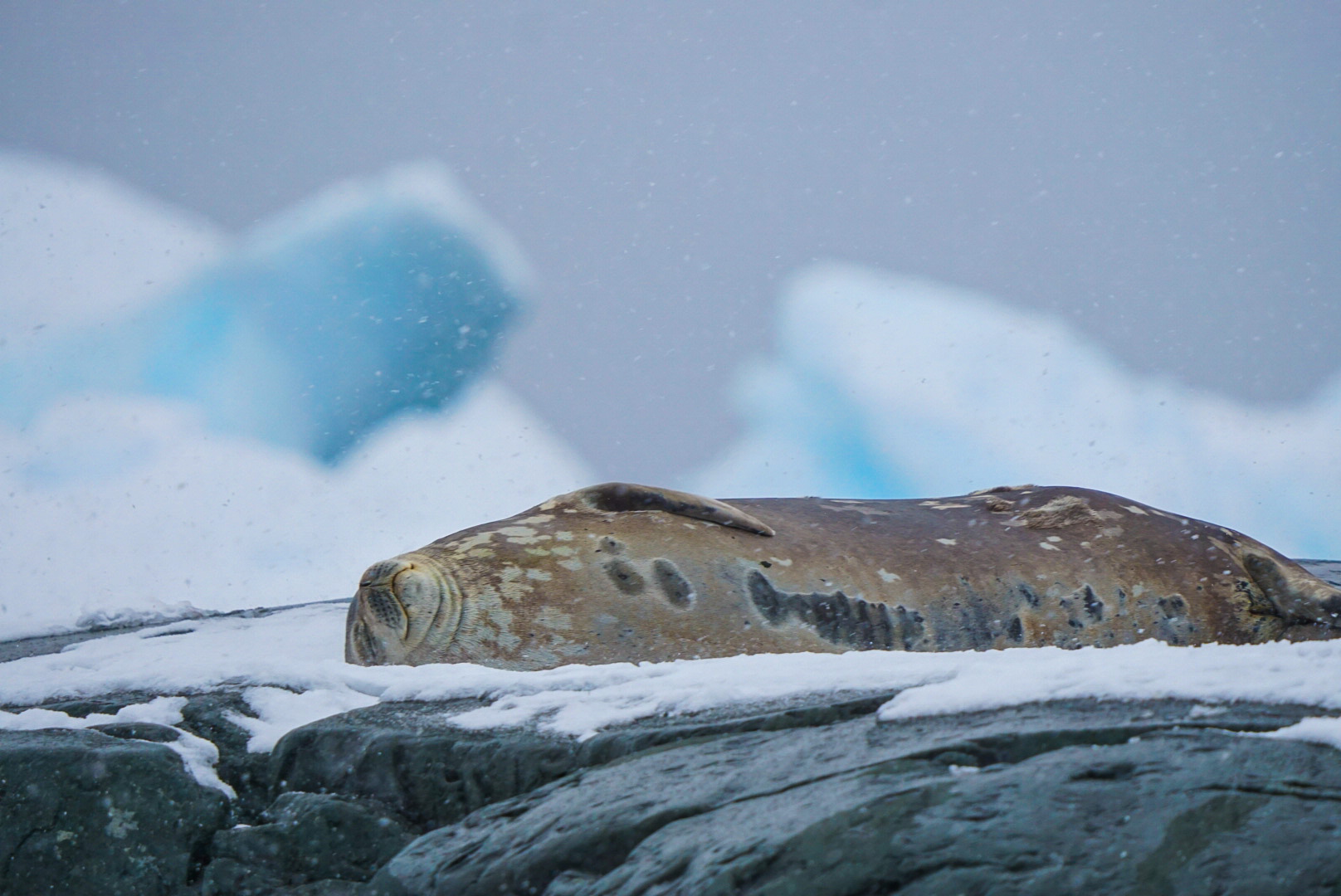
Photo Credit for this beautiful seal photo: Mindy Sue