by Earlene Cruz | Dec 21, 2025 | Blog, Travel
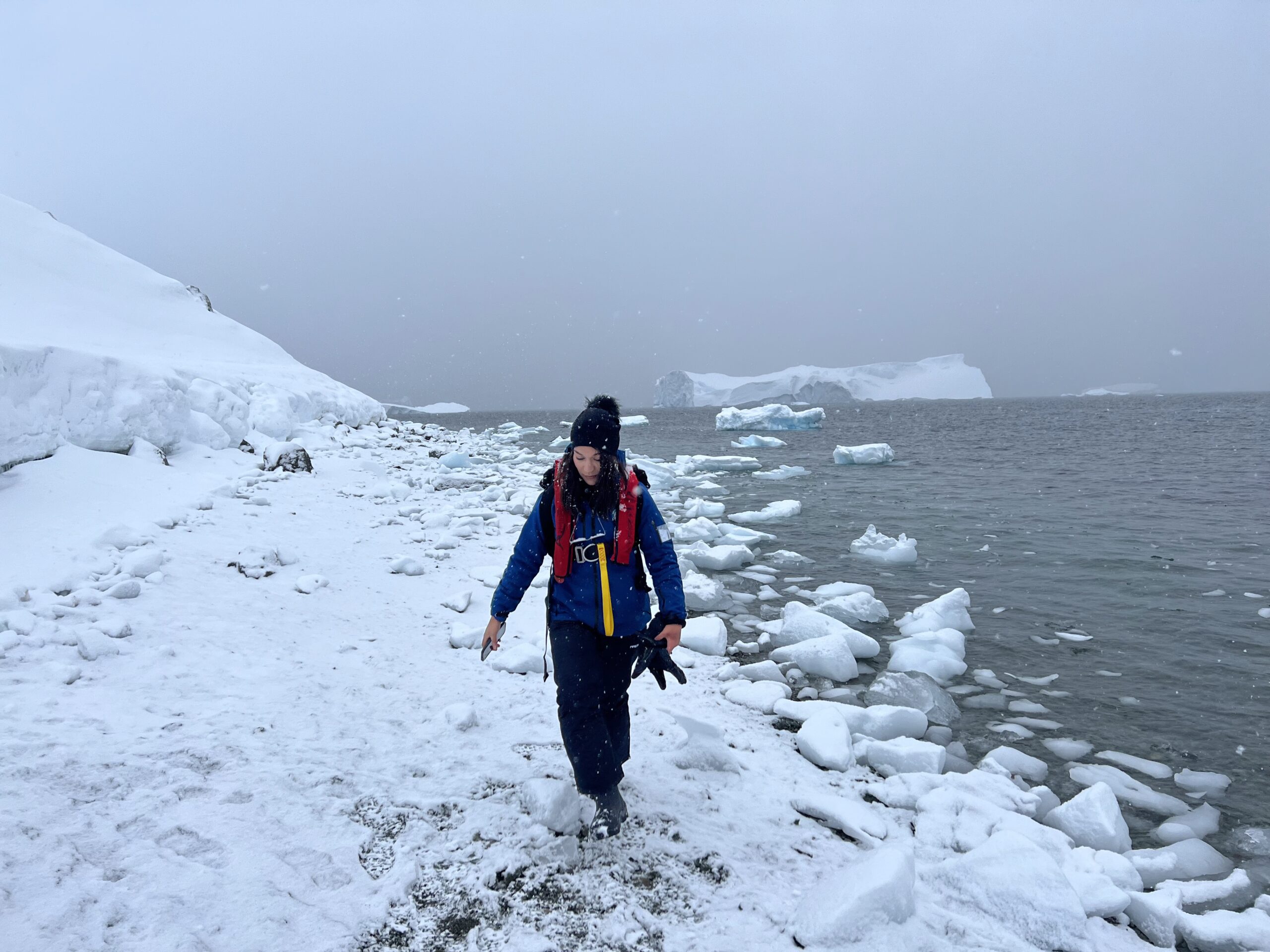
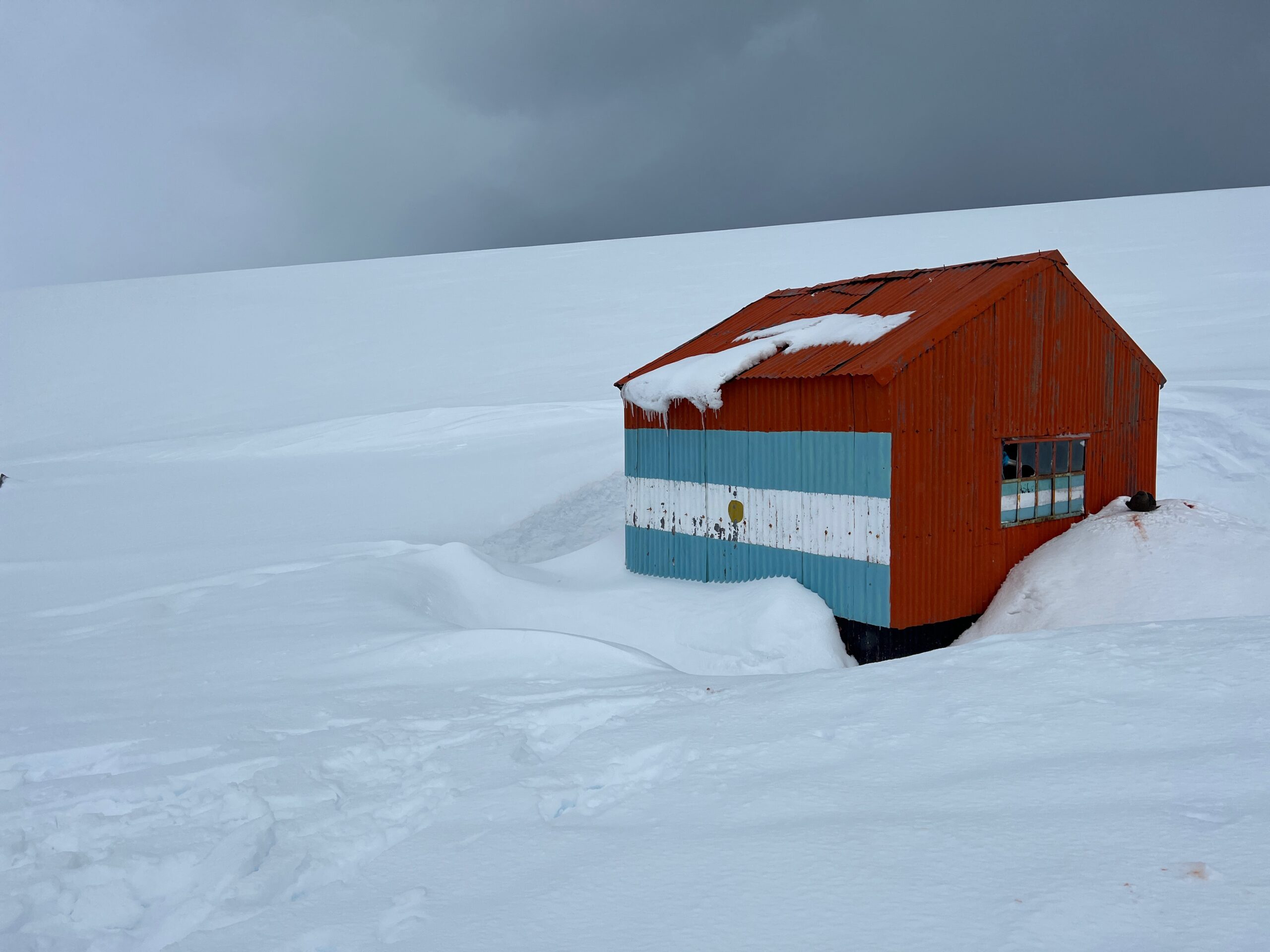
The decision to become an Antarctic Ambassador was not one I made lightly. As a passionate advocate for sustainable travel, I knew that exploring such a pristine and delicate ecosystem came with an immense responsibility. One of the most eye-opening experiences I had during this trip was the careful biosecurity procedures enforced upon our arrival. We were required to go through a thorough biosecurity vacuum to minimize the introduction of invasive species to the continent—a reminder of the delicate balance we must all strike between exploration and preservation. It was a humbling experience that reminded me why I had committed to this cause in the first place.
Life on the ship felt like its own kind of classroom.
With 24 hours of daylight — the true midnight sun — we had to keep the blinds tightly shut just to convince our bodies it was “night.” And every day, we learned something new about the frozen world around us.
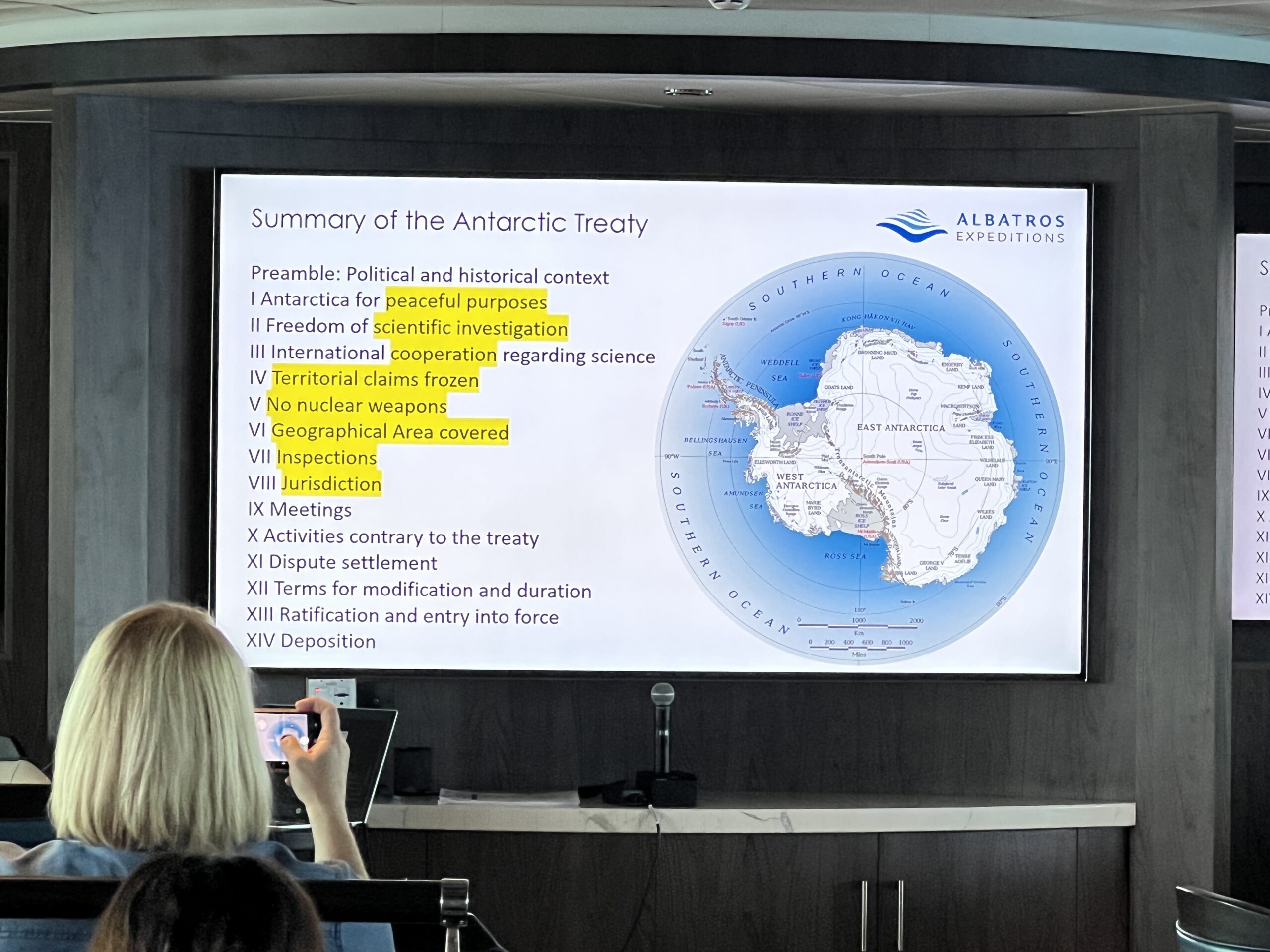
We learned that Antarctica belongs to no one, protected under the 1959 Antarctic Treaty. All research here must be purely scientific — no mining, no resource extraction — and every boat follows strict environmental and safety protocols (this was still peak COVID, so add those on top!).
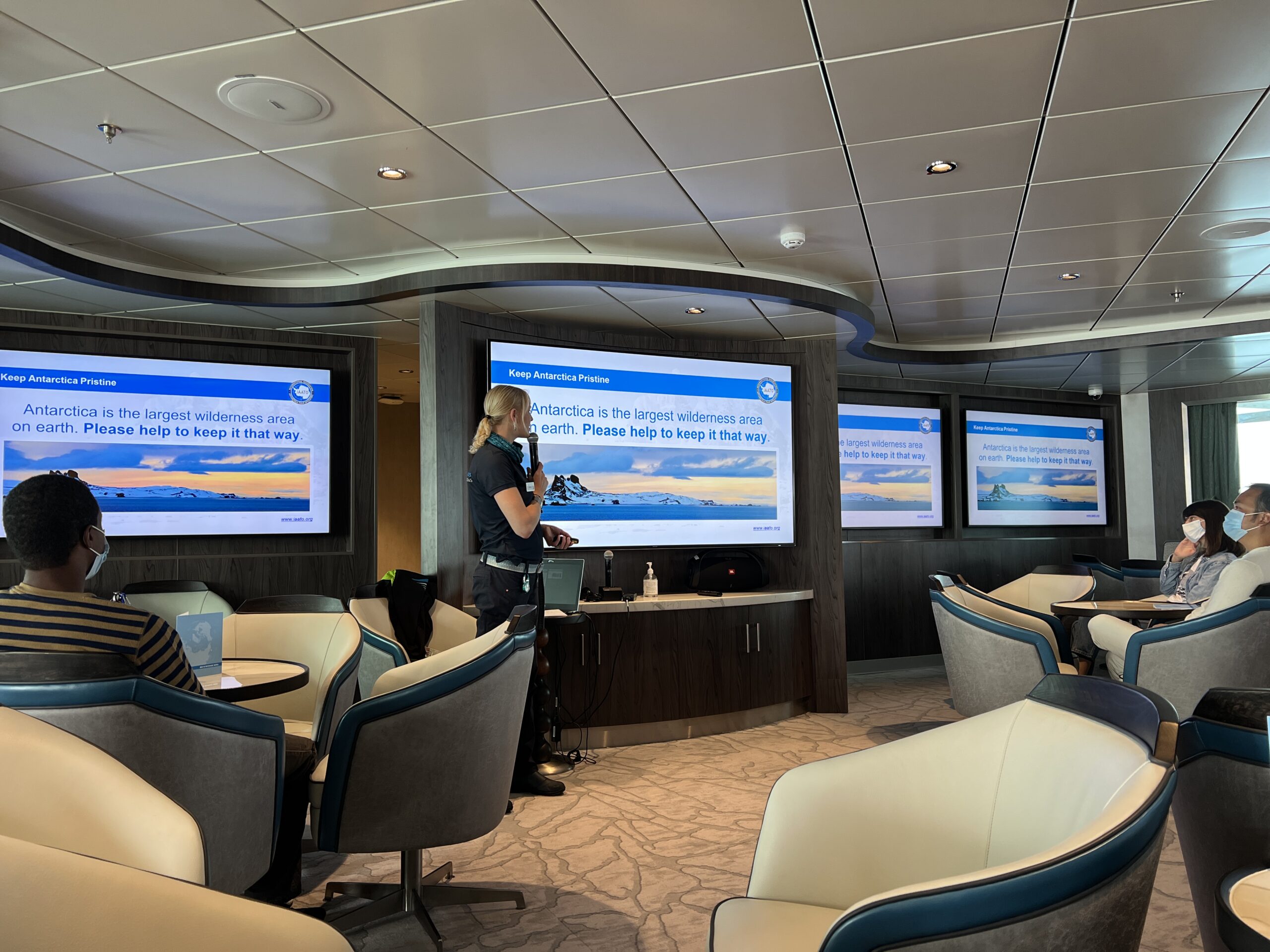
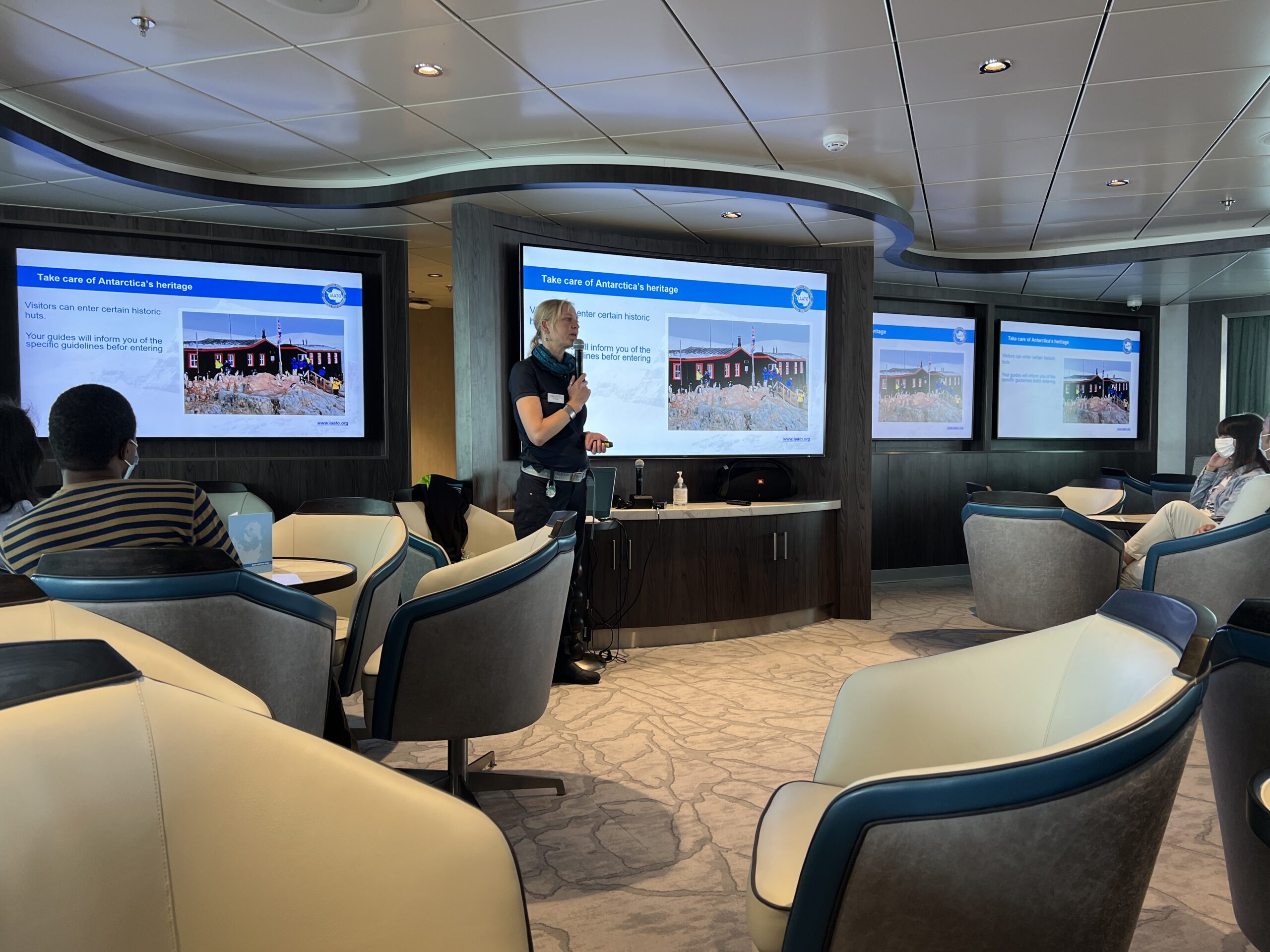
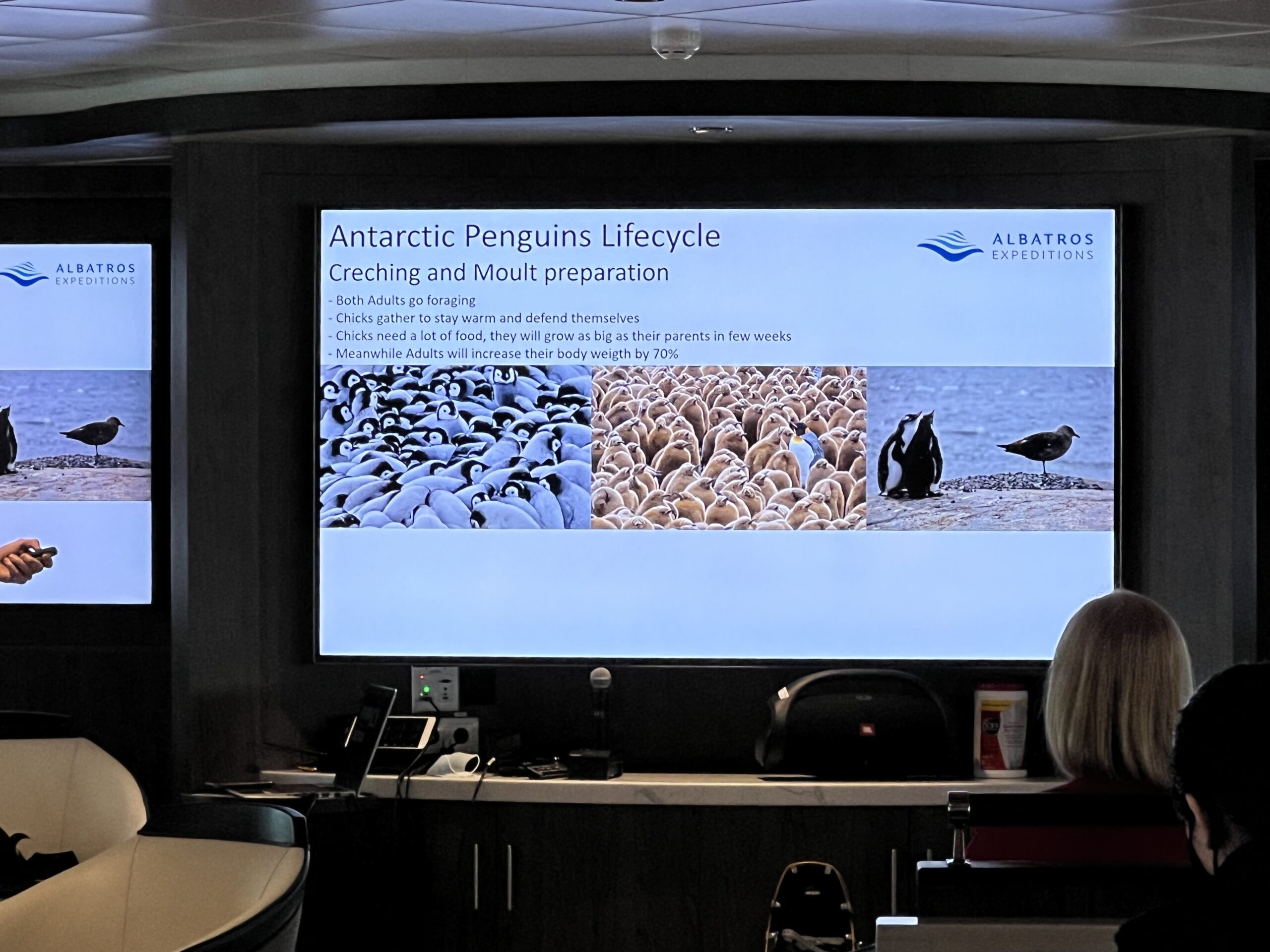
Before stepping onto land, we scrubbed our boots to avoid carrying a single parasite from one penguin colony to another. Penguins have the right of way, by the way. And apparently, “little rocks are hard to find” because penguins will steal them to impress their mates… sometimes aggressively.
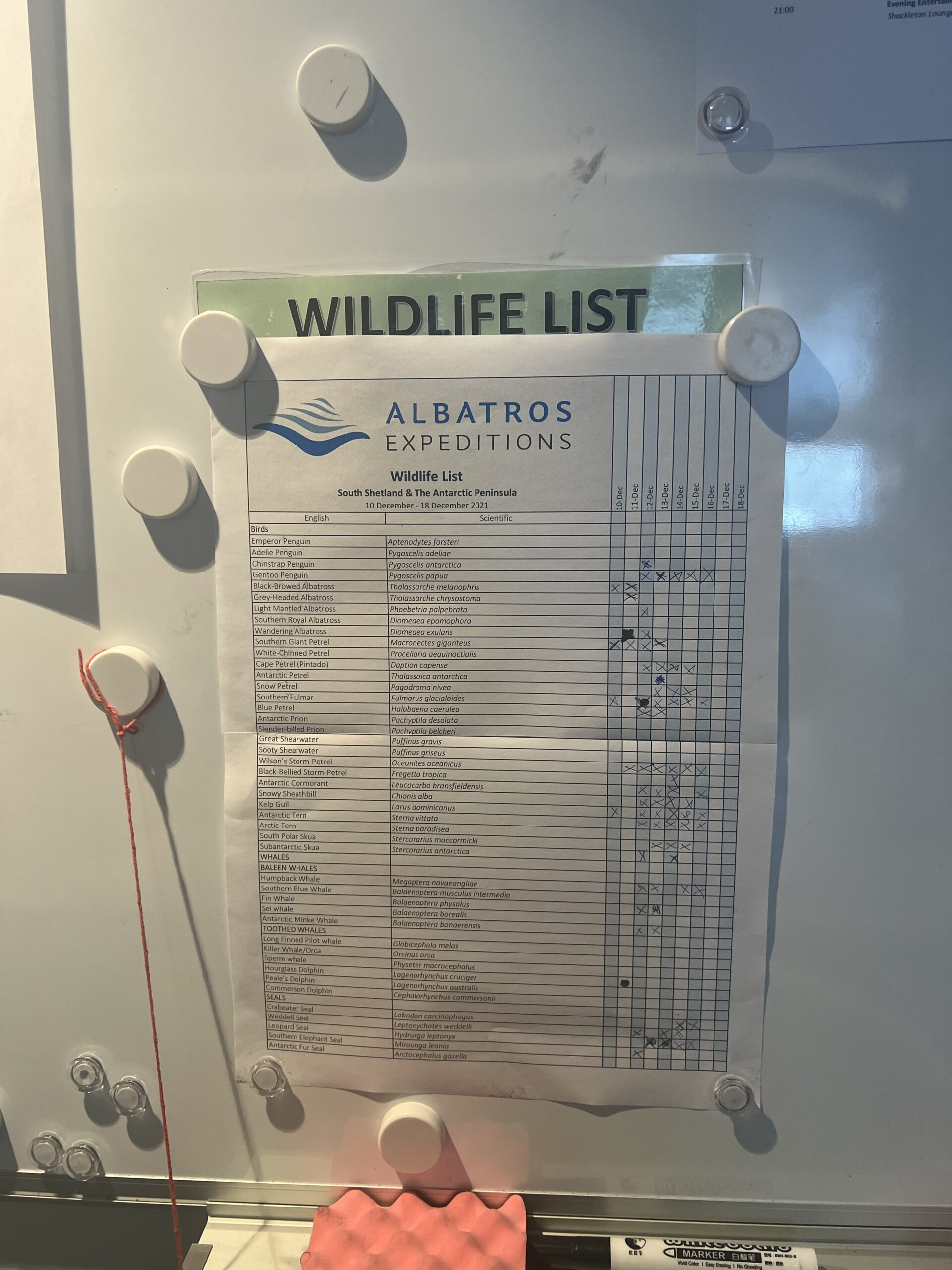
We learned that penguins may even sing to their eggs so the chick recognizes their voices. And that penguins mating in summer isn’t normal — they’re trying to build nests, but the unusually heavy snow has thrown their timing off.
We heard from an ornithologist who adored seabirds more than anyone I’ve ever met. He taught us that some seabirds can sleep while flying, that a cluster of them often means a whale is nearby, and that certain species can smell a carcass from 40 km away.
Life aboard also taught us about people — the camaraderie among ships here is unlike anywhere else. In these harsh conditions, crews share food, tools, and whatever resources another vessel might be missing. Even the seafood onboard was sustainably sourced, because everything here demands respect.
Every lesson was a reminder of how fragile this place is — and how much responsibility we have to protect it.
A World of Numbers
Onboard, we tracked the daily consumption of resources with startling precision—meats, seafood, and even toilet paper—reminding us of the sheer amount of goods that sustain such a voyage. For instance, in our two-week journey, we consumed:
- 870 kg of meat
- 450 kg of seafood
- 840 cans of beer
- 570 bottles of wine
- 600 liters of milk
- 450 kg of flour
- 390 rolls of toilet paper
These numbers might seem trivial at first glance, but they were a reminder of the responsibility we all carry in maintaining sustainability, even when embarking on such an extraordinary journey. As we approached the final days, this accountability deepened as we reflected on the legacy we hoped to leave behind.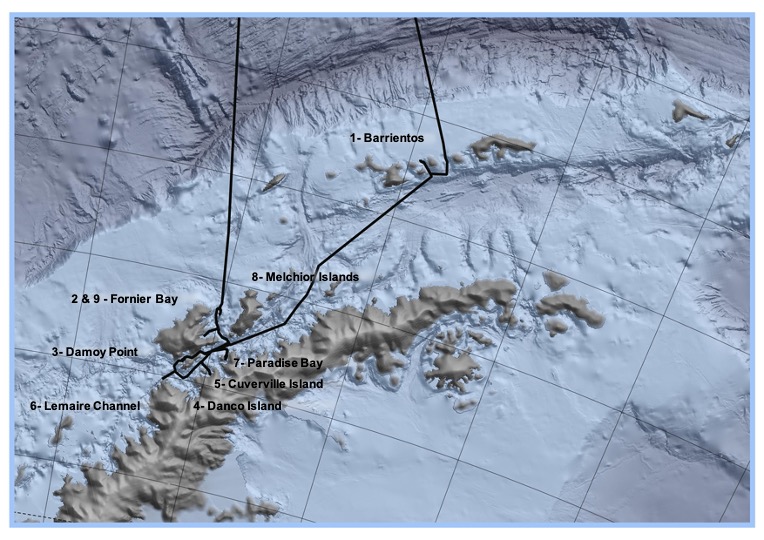
Our Journey
12 December: Aico Islands – The Heart of the Shetlands
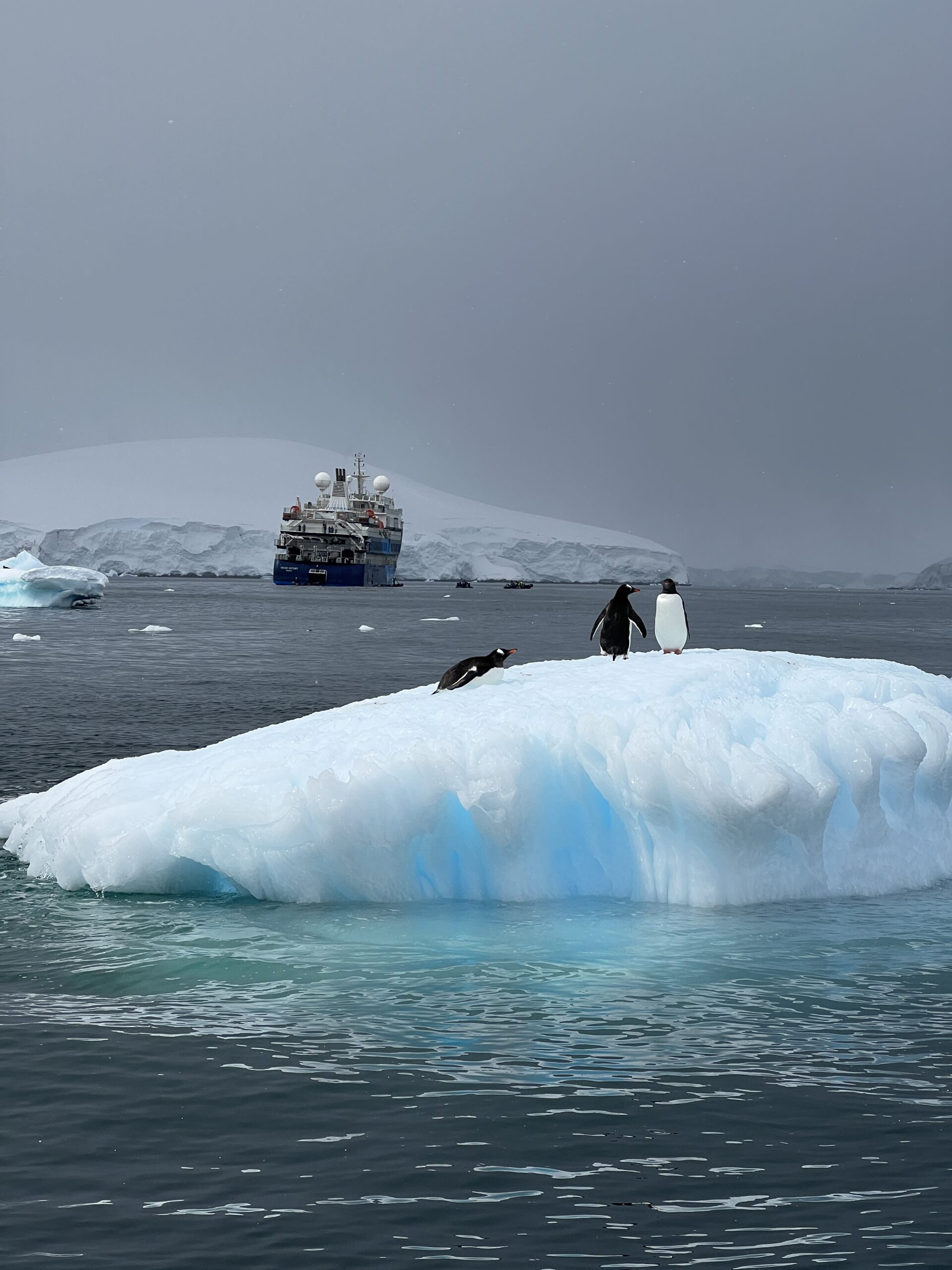
Our adventure began on the 12th of December, with a landing at the Aico Islands, a part of the Shetland Islands that stretches from east to west. Our Zodiac boats brought us to the small islet of Barrientos, where we encountered the bustling life of chinstrap and gentoo penguins. The penguins, many of which were sitting on their eggs, appeared undisturbed by our presence, but we remained vigilant, making sure not to cause them stress.
Their slightly orange beaks, an identifying trait of the gentoo penguin, stood out against the snowy backdrop. It was a moment of deep connection with nature—an immersion into the life cycles of these incredible creatures and a reminder of why such places need to be protected at all costs.
13 December: A Day of Firsts in Antarctica
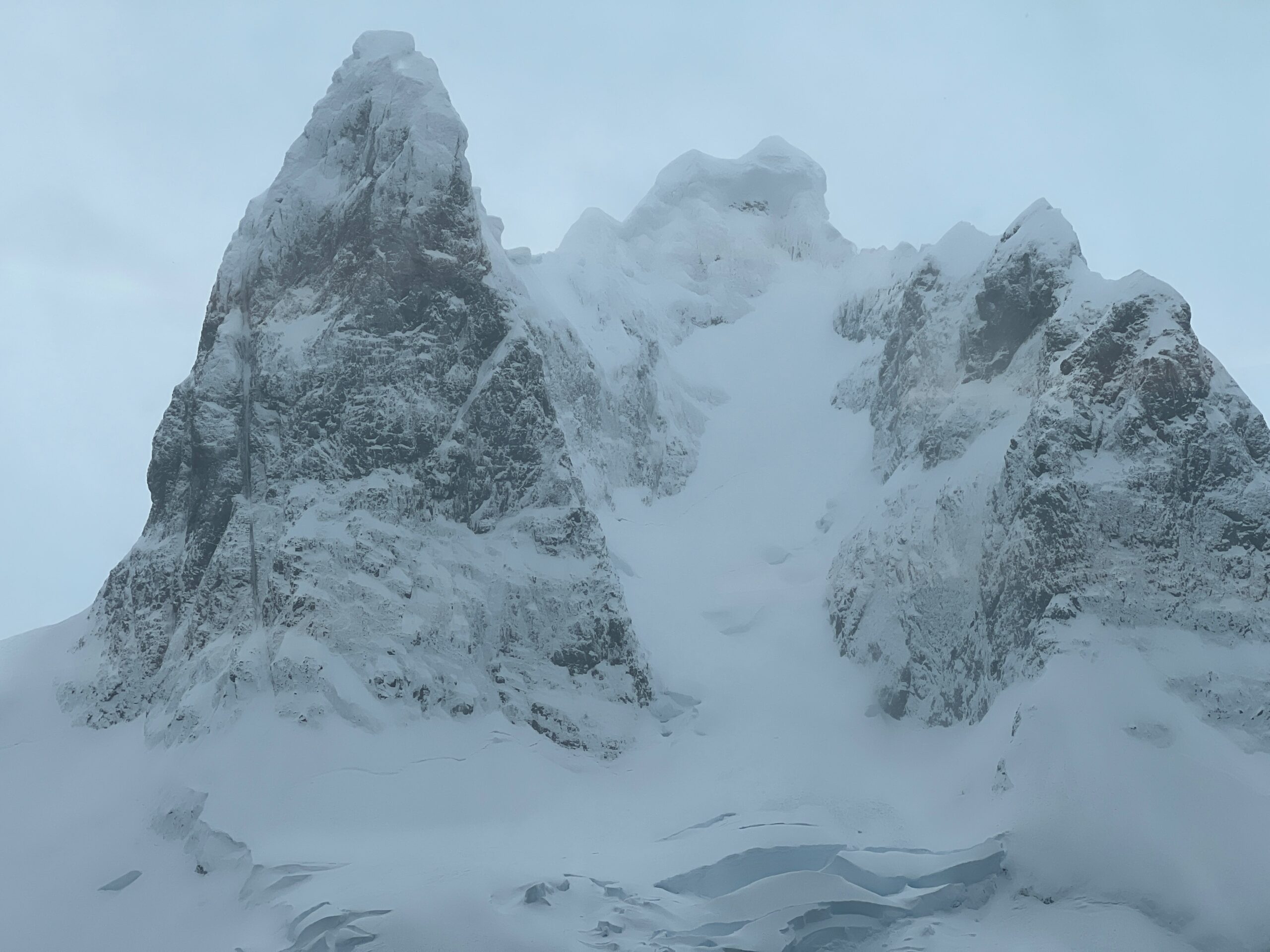
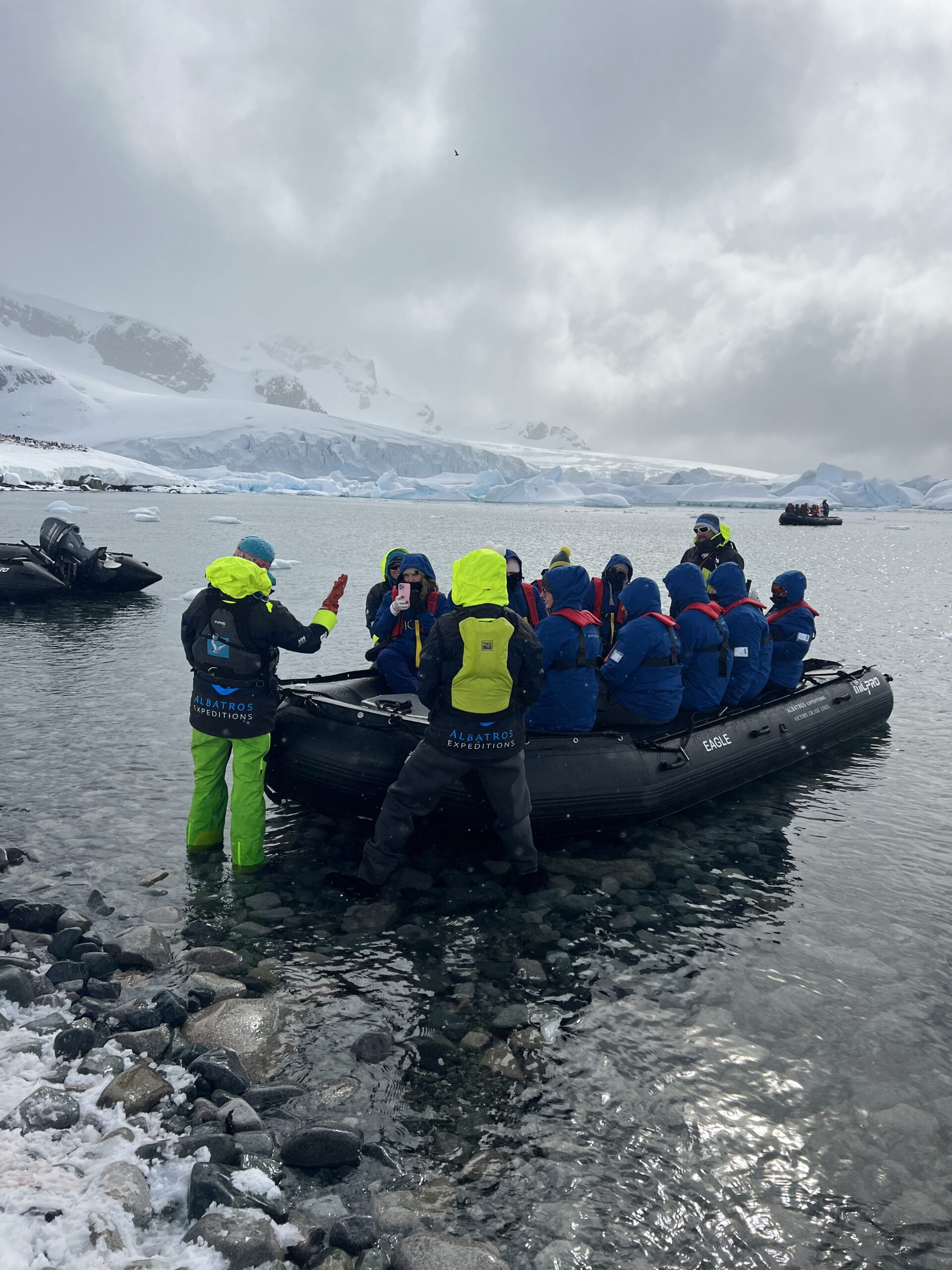
The following day, we arrived at Fournier Bay, our first full day in Antarctica. The icy landscape stretched endlessly before us—glaciers towering over icebergs that glided silently through the bay, their jagged edges catching the early light. As we boarded our Zodiacs and set out, it felt like we were venturing into a world untouched by time.
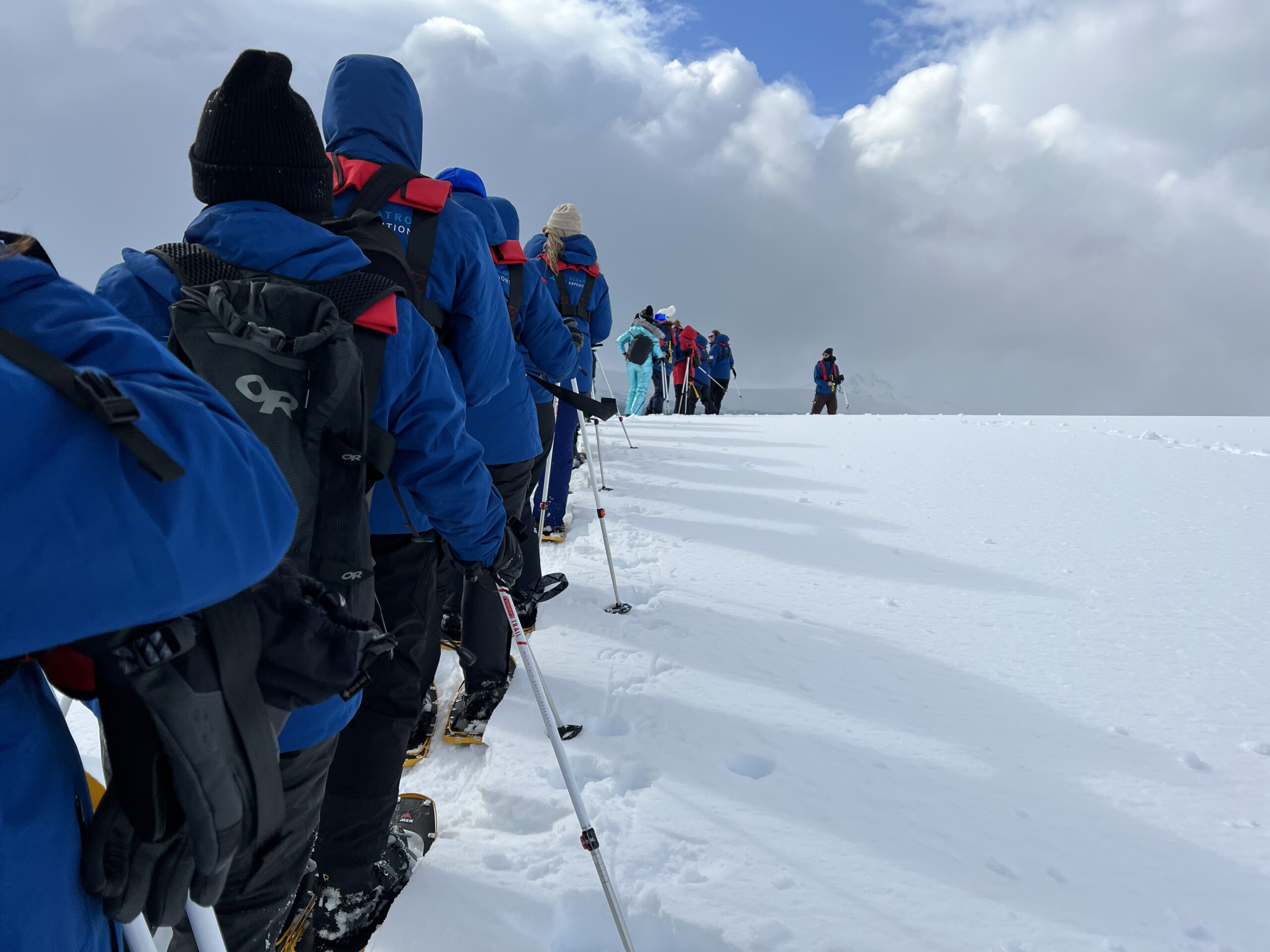
We had no idea what lay ahead—whether we would witness our first encounters with cetaceans, discover ice sculptures beyond anything manmade, or simply absorb the profound stillness of a landscape where the only sounds are the crashing of waves against ice and the occasional rumble from glaciers shifting around us. Some of us hiked to the old British and Argentinian research stations, where our expedition team had worked tirelessly to clear paths and flag our route.
The wind whipped fiercely, but we pressed on, finally understanding just how powerful and unpredictable this land can be. As we wandered, we encountered gentoos swimming through the icy waters, while their partners remained behind, guarding their eggs on the shore. The sense of tranquility here was absolute, and we felt a true connection to this wild and unforgiving land.
14 December: Danco Island and Cuverville
Danco Island and Cuverville Island brought us even deeper into the heart of Antarctic wildlife. The penguins here were truly in their element. We watched as they struggled through thick snow to reach their nests, their belly-slide technique mimicked by our own “blue-coated” passengers who couldn’t help but feel a little envious.
At this time of year, many of the penguins were still mating—a rare sight for us so late in the summer. This delay in their seasonal cycle was likely a result of the heavier-than-usual snow and ice, possibly due to the ongoing effects of climate change. It was a sobering thought, watching these ancient creatures struggling to adapt to a changing environment.
15 December: Lemaire Channel and the First Continental Landing
On the 15th of December, we had our first—and only—continental landing at Brown Base. The excitement was palpable as we boarded Zodiacs and made our way to the tiny beach, just big enough for two boats. This was Antarctica—the 7th continent, and our arrival marked a personal milestone.
As we stood on that small stretch of beach, we marveled at the icebergs and glaciers surrounding us. We knew that the tide would soon start to encroach on our landing site, reminding us once again of the ever-changing nature of this wild land. Our group returned to the Zodiacs for a short cruise, getting up close to the icebergs that loomed like ancient sentinels over the landscape.
Later, Sanne, one of our expedition leaders, gave an enlightening lecture on whales and their incredible role in the Antarctic ecosystem, while Mariam filled us in on the research conducted at the Argentinian Antarctic research base. It was a fascinating day of learning and discovery.
16 December: The Thrill of Kayaking and the Drake Passage
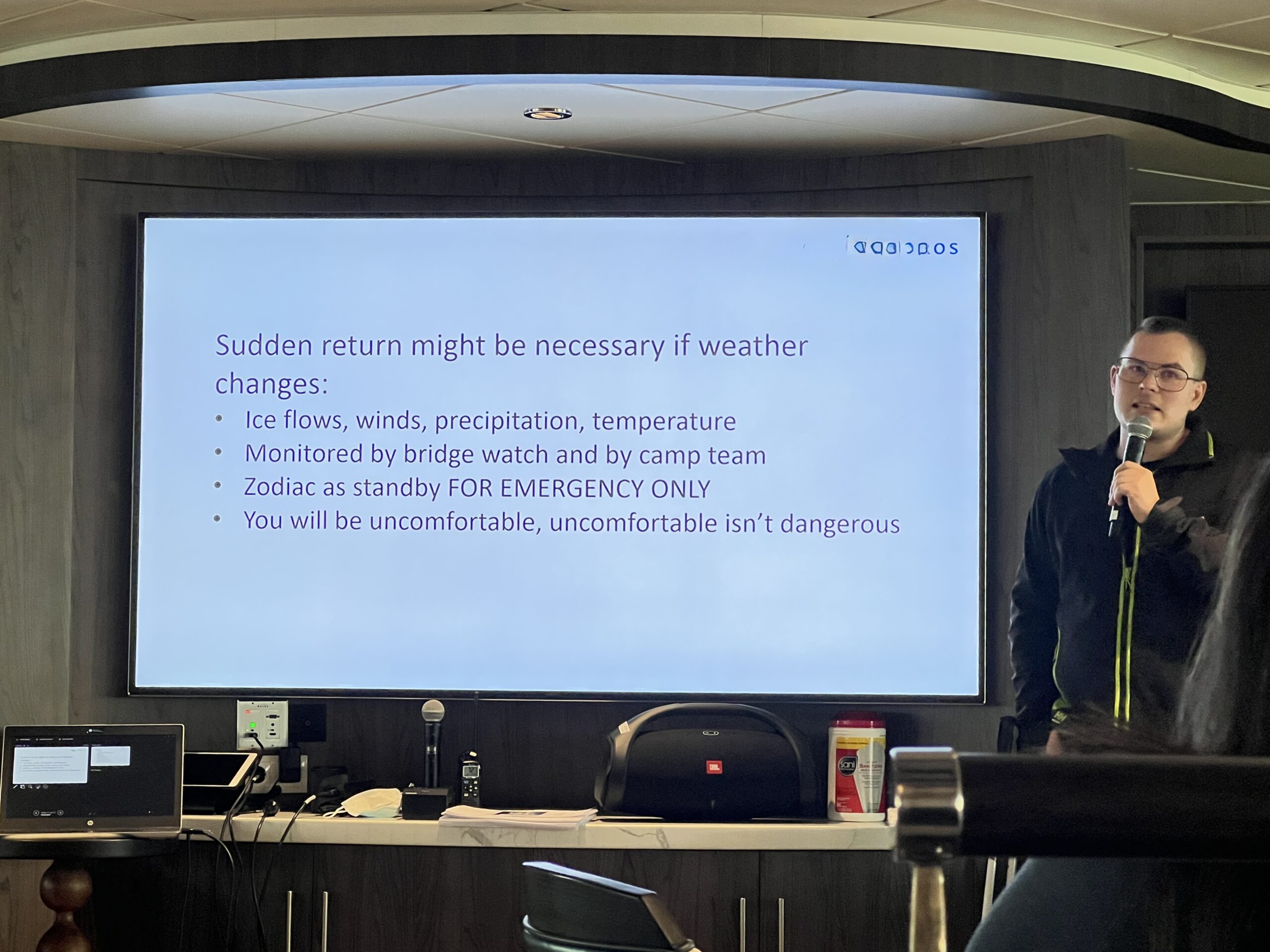
On our final day of Antarctic operations, conditions had shifted dramatically. Stormy seas and 50-knot winds forced us to cancel our planned activities. In a true testament to the unpredictability of expedition travel, the Captain altered course and took us back to Fournier Bay—where we had started. In fact, the difference between an expedition (one like this) and a cruise is that a cruise usually has a set, unaltered path, but an expedition is exclusively reliant on external conditions, so the places we were able to venture to were volatile and changing every day.
As the wind began to calm, a small group of kayakers was given the chance to paddle through sheltered waters, surrounded by ice and steep mountains.
The silence on the water was profound. As we paddled through glacial fjords, with Gentoo penguins swimming around and Weddell seals lounging on the ice, I couldn’t help but feel a deep sense of gratitude for this experience. This was why we had come—to experience nature in its purest form, and to witness how even the most remote places are connected to the global health of our planet.
The Drake Passage and the Return Journey
As we left Antarctica behind, we sailed into the Drake Passage, a notorious stretch of ocean known for its fierce storms. By the afternoon, the storm had settled in full force, and many passengers retreated to their cabins to wait it out. Those of us who remained in the observation lounge were mesmerized by the towering waves crashing against the ship, but despite the tumultuous seas, the M/V Ocean Victory held steady, cutting through the waves with impressive strength.
It was a fitting end to a journey that had tested us, humbled us, and left us in awe of the natural world. We spent the remaining days of the voyage discussing the creatures and ecosystems we had encountered, from the tiny krill that sustain the Southern Ocean to the strange and unimaginable creatures that live in the depths of the Antarctic waters.
Reflection: The Journey’s End
By the time we entered the Beagle Channel on the 18th of December, we were all different. The sense of camaraderie and shared experience had transformed us. We had become witnesses to a world that few people ever see—a place where every step is a reminder of the delicate balance we must maintain between human progress and environmental preservation.
On the 19th, we disembarked, leaving behind the frozen world of Antarctica but carrying with us the knowledge that our journey had only just begun. As an Antarctic Ambassador, I knew I had a role to play in advocating for the protection of these fragile ecosystems—and, perhaps most importantly, in spreading the message that sustainable travel is not just a choice but a responsibility.
Closing Thoughts:
This journey was more than a simple vacation. It was an immersion into a place that is both wildly beautiful and deeply fragile. As I look back on those days—spending time with penguins, kayaking amidst glaciers, and reflecting on the critical role whales play in the Southern Ocean ecosystem—I am reminded of why I embarked on this journey in the first place: to learn, to grow, and to carry the message of sustainability forward.
by Earlene Cruz | Dec 12, 2025 | Blog, Travel
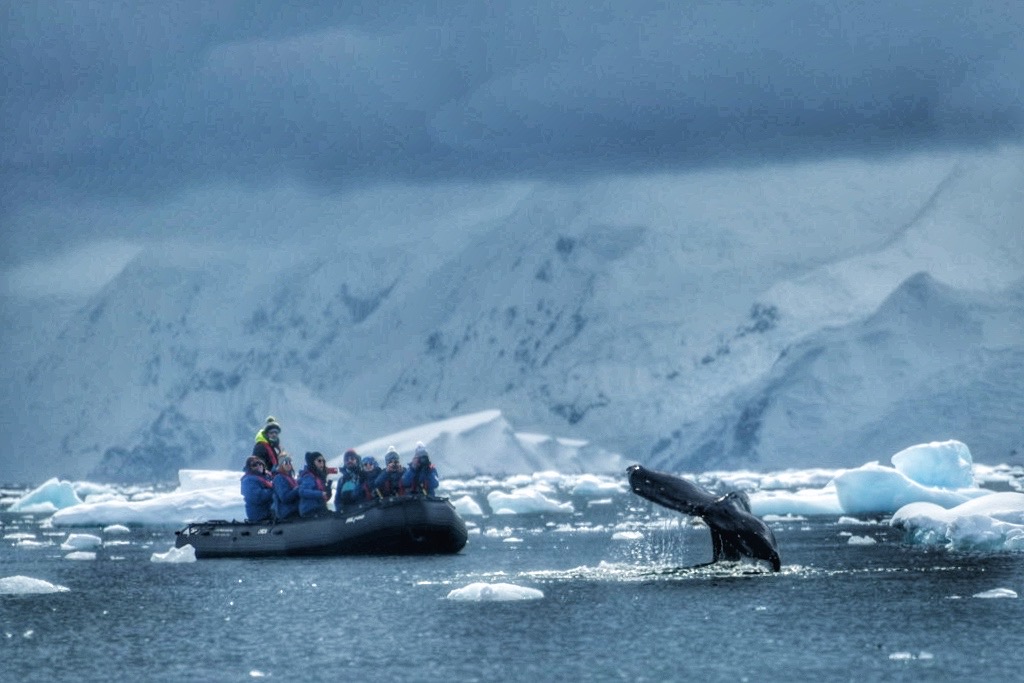
In the middle of Fournier Bay, Antarctica, amid wobbling glaciers and crackling ice, the only sound interrupting the silence once the zodiac’s engines turned off, we saw a breaching humpback whale. She was massive, feeding on krill and dancing in the way that these enormous mammals do, fashionably showing off her tail as it slapped the surface of the bay, revealing her imperfections.
Two parts of her tail were cut off, probably by fishing nets, our guide Phil mentioned. This meant that her journey—from Tonga and Latin America where humpbacks normally breed, to Antarctica where they feed—was probably far less efficient and much harder to achieve.
Watch the full video, here
With no strict sanctions in place to prevent whaling, fishermen in countries like Japan, Norway, and Greenland continue the practice despite international laws designed to protect these creatures.
Whale consumption in Japan increased after World War II when people were dying of starvation, which is why it remains more prevalent among older generations than younger ones. As the whale continued to dance around us, Phil explained that the Japanese government, viewing whaling as a facet of cultural heritage, has advocated for introducing whale meat in school meals. According to him, children generally don’t like the taste of whale: indeed, it it takes a long time for them to acquire it.
This moment in the middle of the open water, thousands of miles from home, highlighted the importance of school meals as a means of promoting culture while balancing human and planetary health. In that instance, all my interests as a sustainability advocate converged.
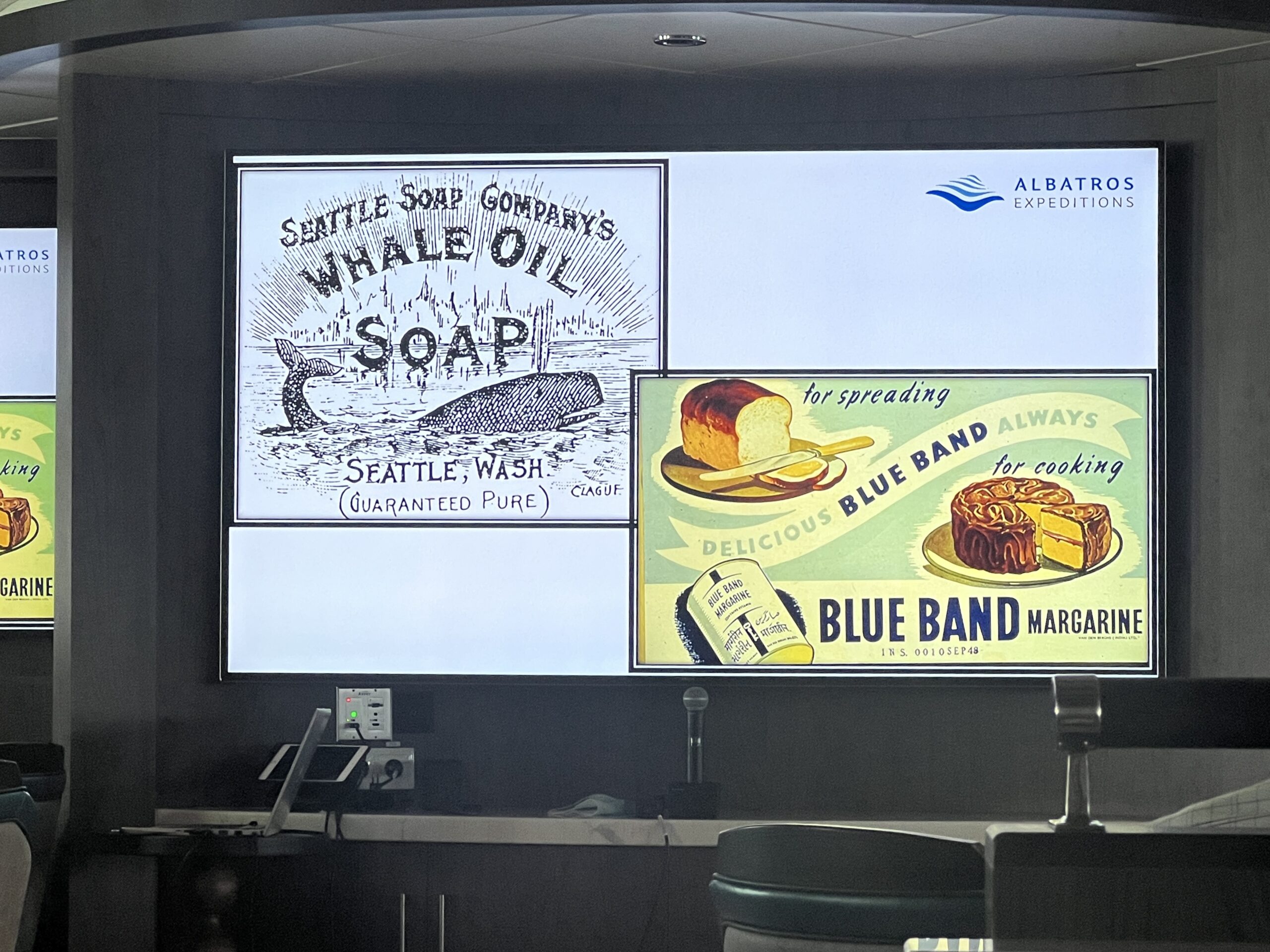
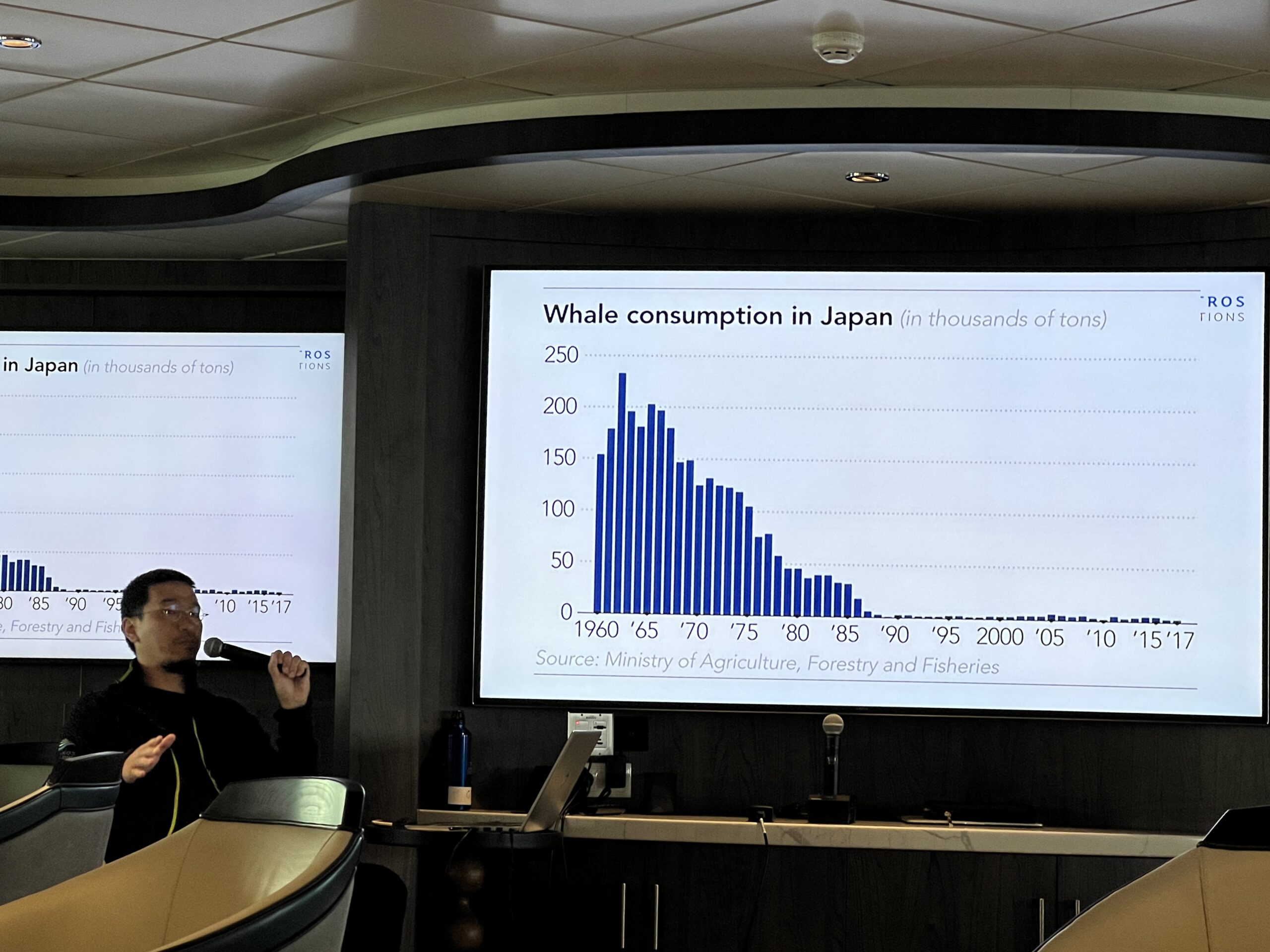
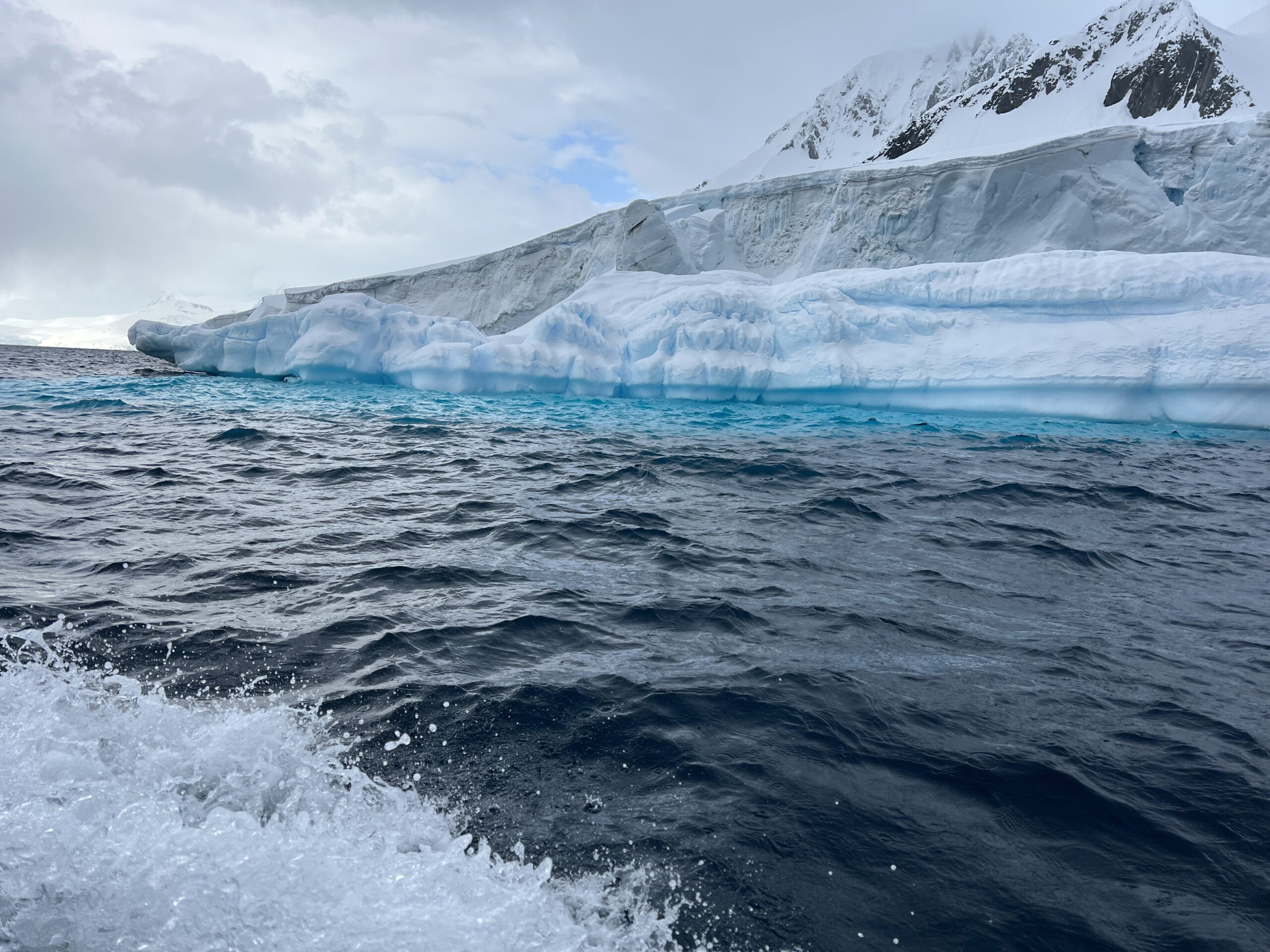
It reminded me of a documentary about the Faroe Islands that presented the battle between culture and human health as it relates to whale consumption. Whales are at the top of the food chain, accumulating mercury, microplastics, and persistent organic pollutants (POPs), which we then ingest when we eat them. Yet indigenous communities in the Faroe Islands have been eating whale for centuries. How do we balance this cultural and historical connection against current-day human and planetary needs?
Back on the ship, we learned that although humans are often said to be the only species capable of developing culture through language and community, whales sing too. And the data shows that their songs have shifted dramatically since the 1970s. If animals can adapt their behaviors to survive, what might we learn from them about reshaping our own culture?
In that moment, as I found myself advocating for a convergence of cultural respect with human and planetary health in the food system, all my worlds seemed to align. It felt as though the universe was speaking through that whale, on that boat, nudging me toward a deeper journey—maybe not to Antarctica, but into depths of a different kind.
Thank you for reading this story. I’d love to hear your thoughts, and I look forward to having you be a part of what comes next.
With gratitude,
Earlene
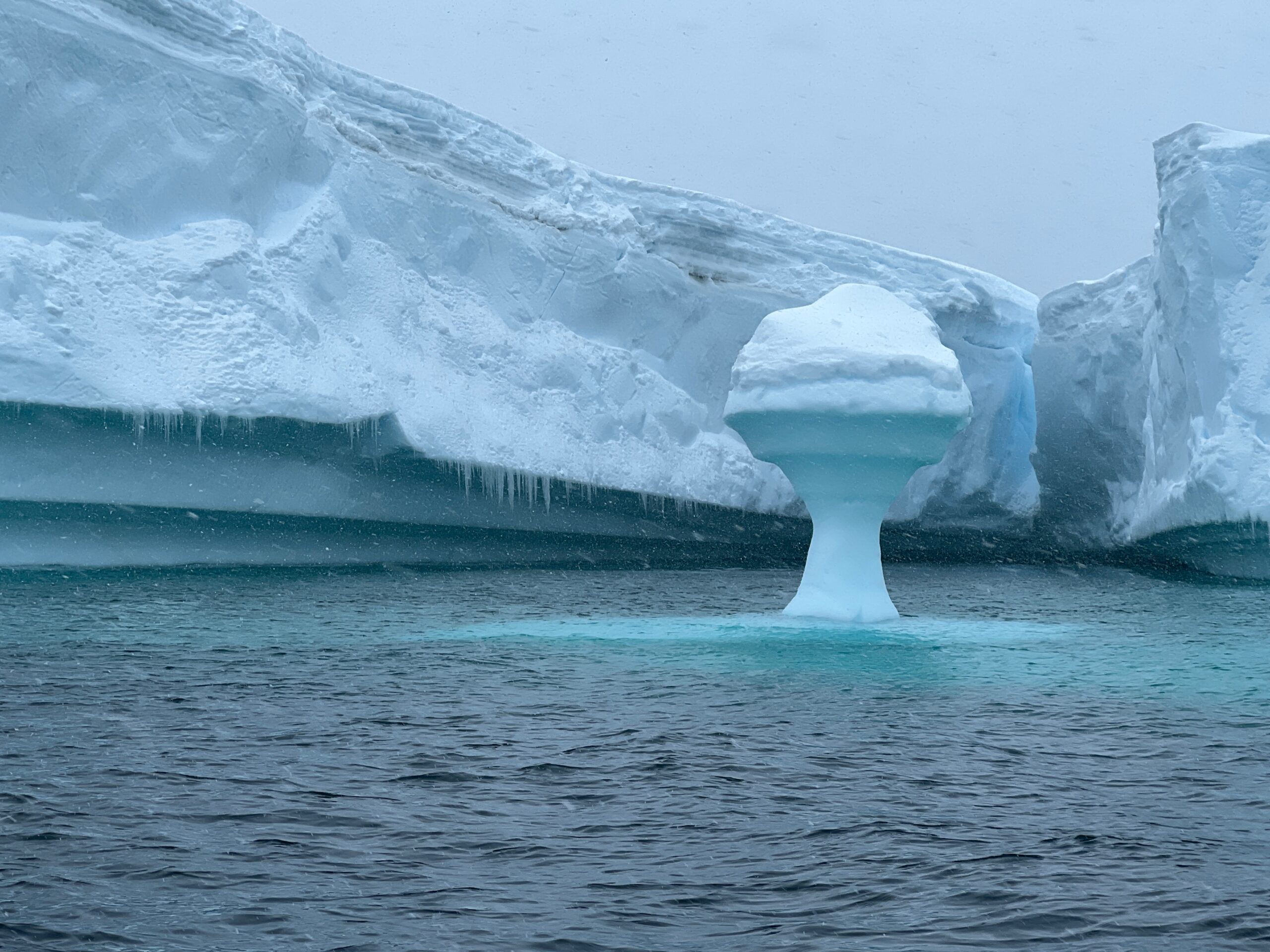
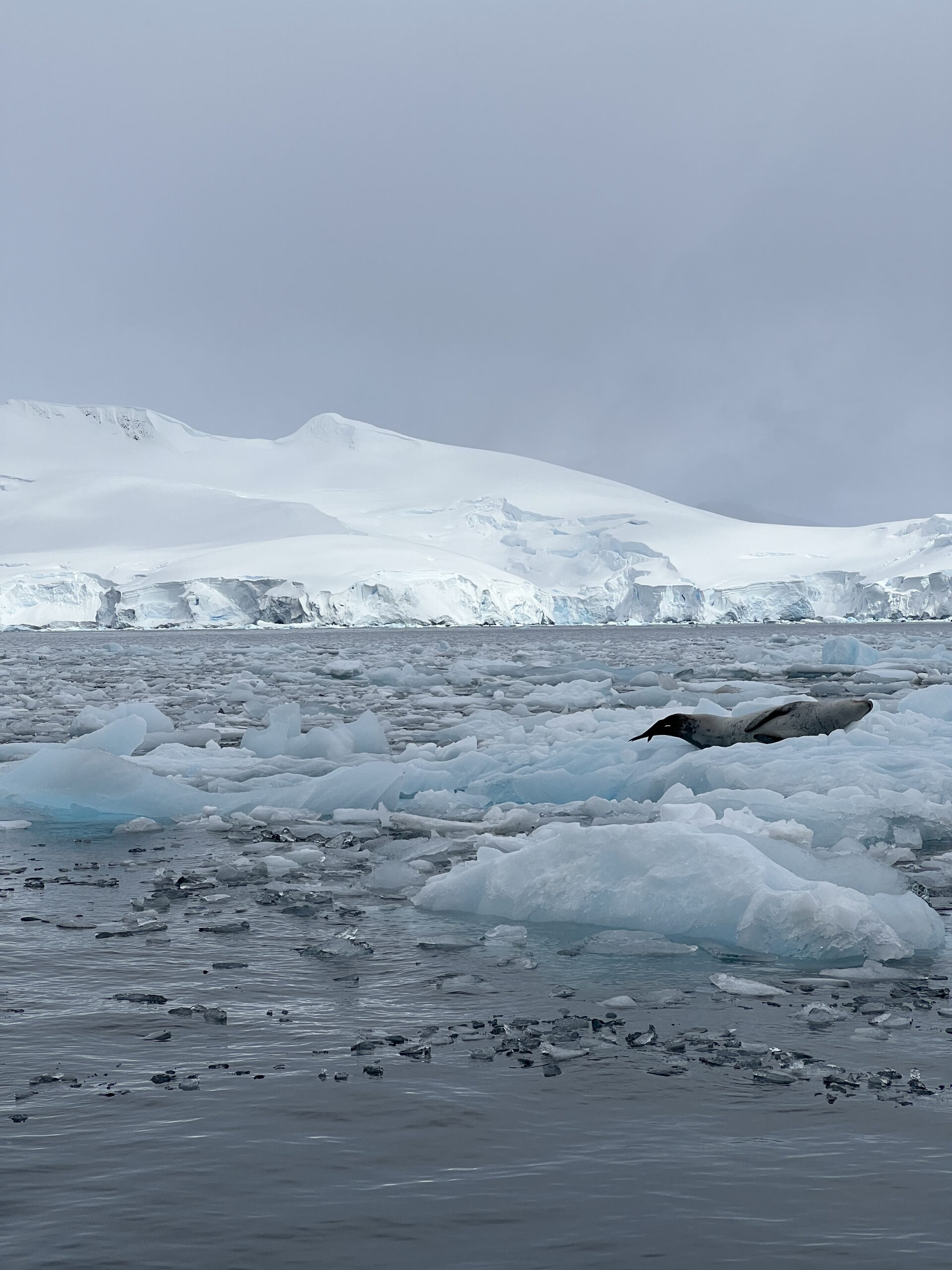
Don’t these look like ice cream cones?!
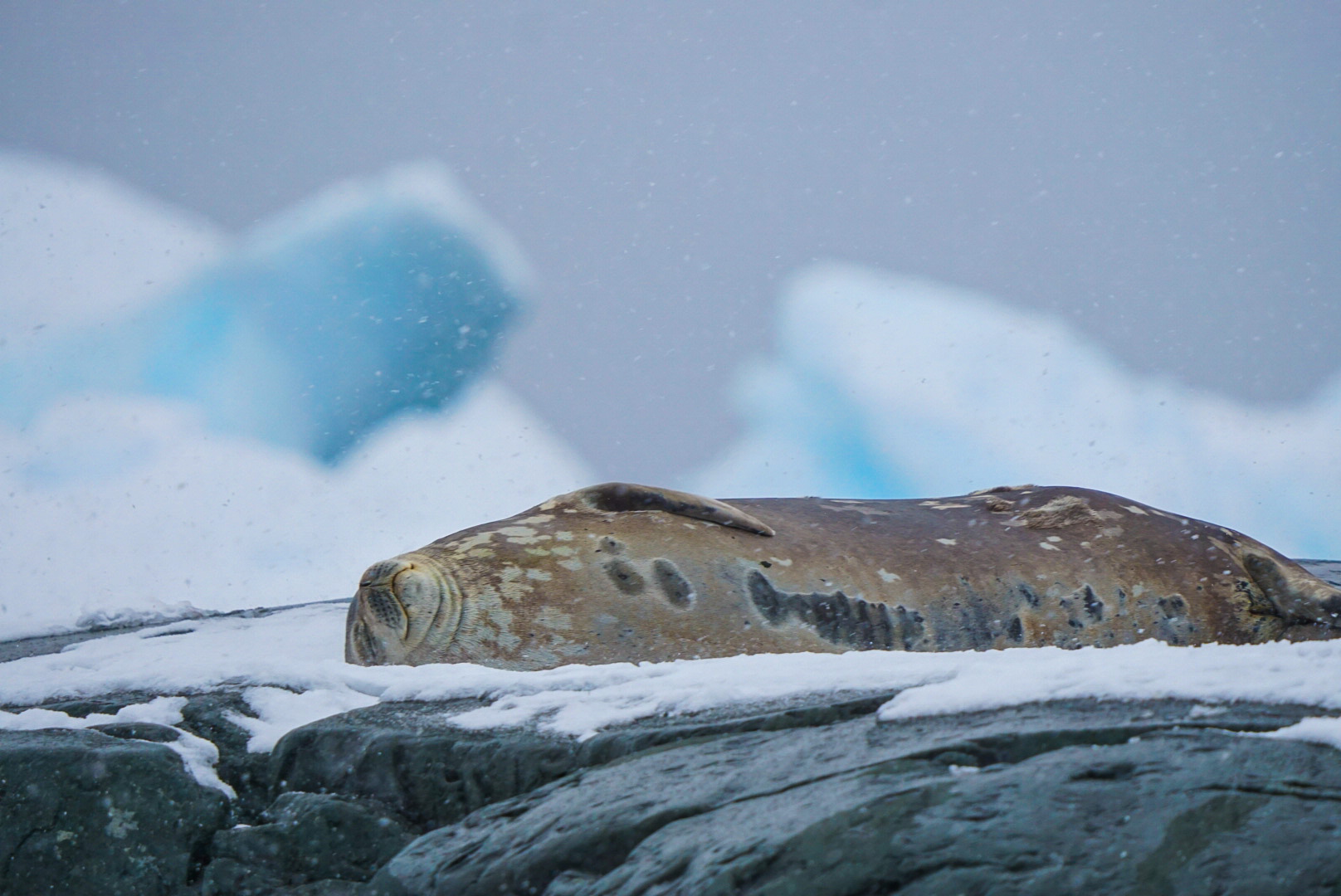
Photo Credit for this beautiful seal photo: Mindy Sue
by Earlene Cruz | Dec 12, 2025 | Travel
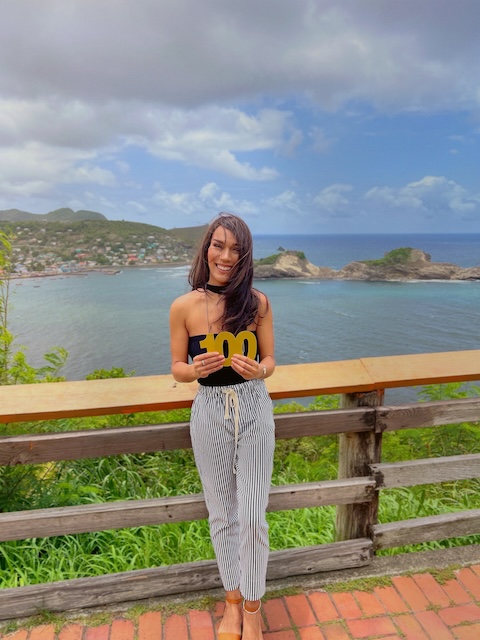
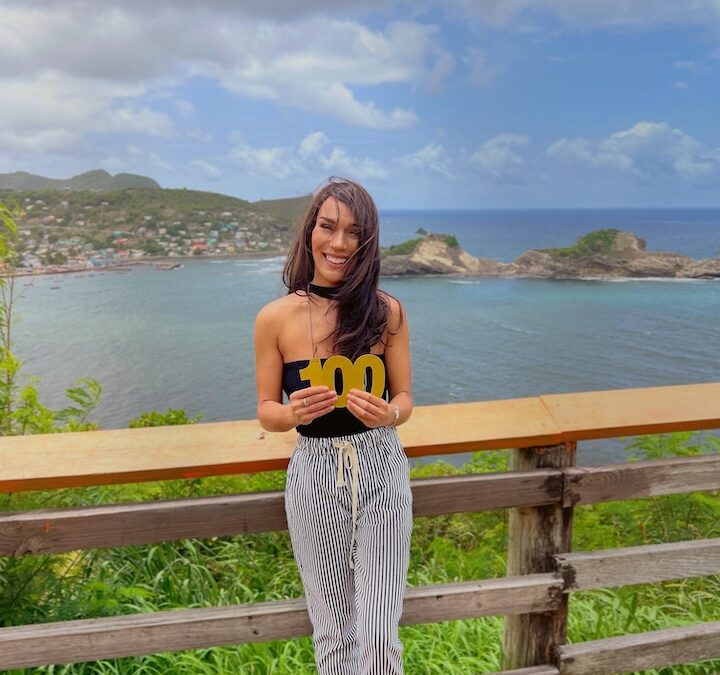
Last year, I celebrated my birthday in a place I’d never been before, and in doing so, I marked a deeply personal milestone: I visited my 100th country.
A hundred countries. It’s still hard to wrap my head around that number — not because of the count itself, but because of everything those countries hold: stunning landscapes, vibrant cultures, soul-warming meals, and most importantly, the people whose lives and stories have quietly and powerfully shifted my own.
Until now, I’ve kept most of those stories to myself. For a long time, I was afraid to share them. I worried about the slippery slope between living for the moment and living for the gram. I didn’t want to commodify my memories or reduce real human connections to photo ops. I’ve seen how the lens — mine included — can act as a barrier between traveler and host, a filter between presence and performance. I’m not proud to admit that I’ve sometimes been guilty of this too.
But things have been shifting. Slowly. Intentionally.
I’ve come to realize that sharing doesn’t have to mean broadcasting. It doesn’t have to mean spectacle. Sharing, for me, can be an act of meditation, a way to relive and re-examine, to connect the dots I missed the first time because I was “too in” it. It can be a way to stretch the meaning of a moment beyond myself, to see what it might evoke in others. I’ve kept private blogs, archived thousands of photos, written bits and pieces of stories, all tucked away in digital folders and journals. Until now: as I look into the future, I’m also looking into the past with deep reverence for how it has shaped me.
There’s a quote I heard once that keeps echoing in my mind: “Happiness is only real when shared.” And after years of solitary reflection, I finally feel ready to invite others into my world — slowly, vulnerably, and with an open heart.
So I’m going back, but not in order. This won’t be a linear, country-by-country recount. Life isn’t like that, and neither are stories. There may be months when I don’t share at all, as stories need to be digested and inspired. This won’t be about the number of countries. It’ll be about the people I met, the smells and spices I can still taste, the lessons I carry with me. You’ll see memories from years ago alongside moments from this month. It’ll be messy, heartfelt, and full of soul. And always, there will be food — the universal language, the bridge across cultures, the centerpiece of so many of my most meaningful conversations.
As someone with a deep reverence for culture and a background in cultural anthropology, I know that storytelling comes with responsibility. I aim to honor the people and places I write about with accuracy, humility, and respect, always recognizing my place as an outsider, and always open to dialogue. Whether it’s the culinary journeys of indigenous communities, the quiet beauty of a daily ritual, or the joy of a shared meal, my hope is that you’ll see a bit of our shared humanity reflected in these stories.
My journey started in the Caribbean, on vacations to visit family and on cruises, not far from home, but places that left me wide-eyed and curious. Later, I ventured to Europe as a high school exchange student, and that curiosity only grew. Whether through my work with international organizations, collaborations with chefs and farmers around the world, or long, meandering conversations with strangers-turned-friends, travel has always been my way of learning from the source, of seeking truth, connection, and meaning.
Most of my loved ones don’t know the full extent of these stories. I’ve held them close, maybe out of shyness, maybe out of the fear that sharing them would change them. But I don’t want to stay small anymore. There’s too much beauty to keep hidden, too many small, ordinary moments that deserve to be seen.
This space — whether you’re reading it on my blog, on social media, or somewhere else — is for love, for joy, and for celebration. It’s a space where I’ll highlight what’s good in the world, even as I acknowledge its complexities. It’s a love letter to the cultures that have shaped me, the people who welcomed me, and the foods that nourished me — body and soul. It’s about places I’ve visited — some only once, and others countless times throughout my life.
If you’re reading this, you’re already part of my circle. Thank you. I hope my sharing inspires you to do so, too – to take a moment and give us a piece of your world, no matter where it is – and that it allows you an opportunity to look at the world and your place in it — with a bit more tenderness, a bit more curiosity.
We only get one life. I hope we get to live it, taste it, and share it — fully and generously.
With gratitude,
Earlene
Ps. Can you guess where this 100th visit was and what I was doing there?!
by Earlene Cruz | Dec 12, 2025 | Opinions
I’ve kept a journal since I was eight, pouring my thoughts onto its pages every Sunday. Rereading those old journals still gives me a rush of anxiety, but writing has been a cathartic and essential way of processing life—and of living it fully.
Above all, writing has been a tool for curiosity, helping me bridge the many worlds I inhabit—as a traveler, a scholar, and someone navigating life. At my high school graduation, our principal asked us to make a promise: to remain lifelong learners. I took that charge seriously. Degrees and titles may follow us, but learning happens every day, in the places we know intimately and the ones we’ve only just discovered. Writing allows me to return to those places with new eyes, in harmony with one of my favorite quotes: “Change the way you look at things, and the things you look at change.”
I hope this space becomes an extension of that philosophy—a place for sharing, learning, and a kind of symbiotic conversation that helps me grow into a more thoughtful, informed, and empathetic person.
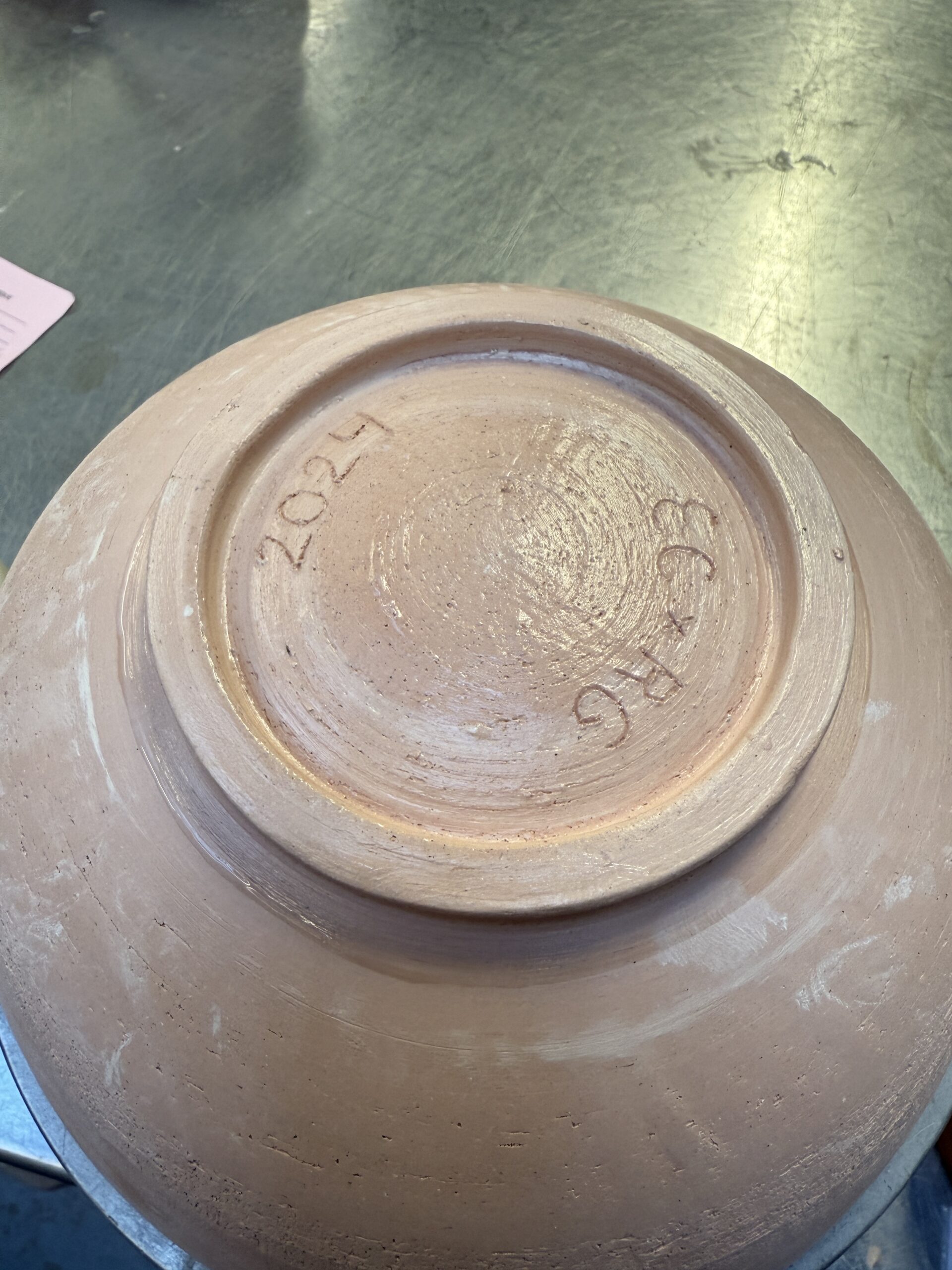
This will be a home for the internal journeys that thread through my many interests … and all the small and sweeping moments that shape a life. I’ve come to believe that meaning doesn’t just live in the extraordinary; it thrives in the everyday, the ordinary, the ubiquitous. That is where I find joy, and it’s where I hope to meet you.
Here, I’ll share the musings I once thought too random or insignificant to belong anywhere. I’m beginning to understand that they are precisely the opposite: they are the threads that connect us. Happiness, I hold fast to the belief, is only real when shared—and sharing isn’t limited to adventures or milestones. It’s found in the small wonders, the quiet thoughts, and the gentle moments that reveal our common humanity.
Thank you for reading, and thank you for joining me on this journey.
With gratitude,
Earlene
by Earlene Cruz | Dec 12, 2025 | Book Reviews
Exploring Food, Culture, and the Human Experience
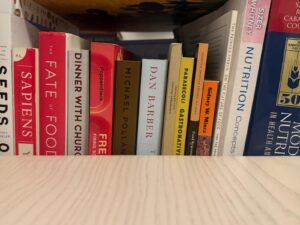
I’ve been thinking a lot about how the books we read shape the way we understand the world — not just intellectually, but emotionally, culturally, and even spiritually. As I continue exploring the big questions that connect food, people, history, and the future, I’ve found myself wanting a single place to gather the themes and reflections that come from my reading journey. My hope is to link the books I’ve read with my own evolving thoughts about them, and to build this into an ongoing series — a growing archive of insights and questions. I’ll be expanding these categories over time, with guidance from my mentors, advisors, and of course, from you. If you have recommendations, or if a particular book has shaped your thinking in any of these areas, I would be so grateful to hear about it. As, above all, I’d love for this to be a space to engage in conversation with these books, and with you. Below are the themes I’m most interested in exploring:
- Travel
- Memoir
- Culture/Anthropology
- Food
- Food policy: global trade, regulation, subsidies, farm bills
- Food education
- Food history: ice age, discovery of farming, civilizations, trade, silk road, Columbian expansion, sugar, Europe boom industrial revolution, population growth, war, globalization
- Food equity: hunger and food insecurity
- Human health: nutrition, noncommunicable disease, longevity, child health, school meals, youth
- Planetary health: seed preservation, sustainability, climate change, biodiversity, environment (pollution), water sustainability
- The influence of war and peace: on agriculture and food systems
- Gastrodiplomacy: – Artic to Antarctica – places that have “no place”
- Children: as our present and our future
- Space: growing food in space
- Urban agriculture
- Controlled environment agriculture: hydroponics, aquaponics
- Food science and recipe development
I’m excited to see where this path leads — and to share the books, thoughts, and discoveries along the way. Thank you for being part of this journey with me.
With gratitude,
Earlene