My Days in Antarctica
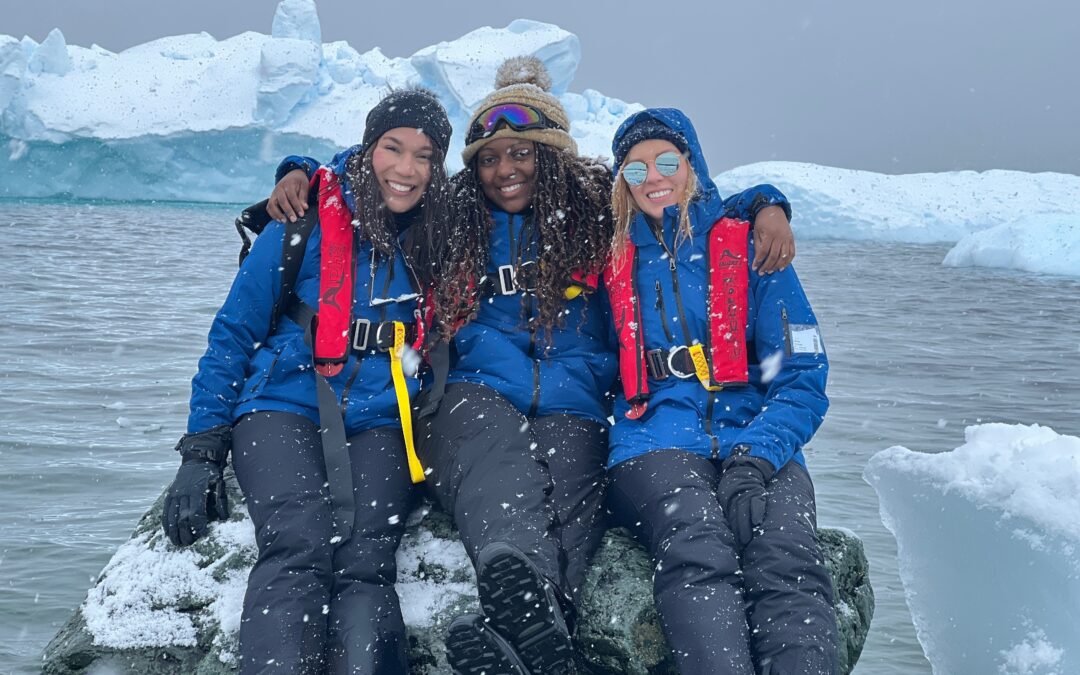
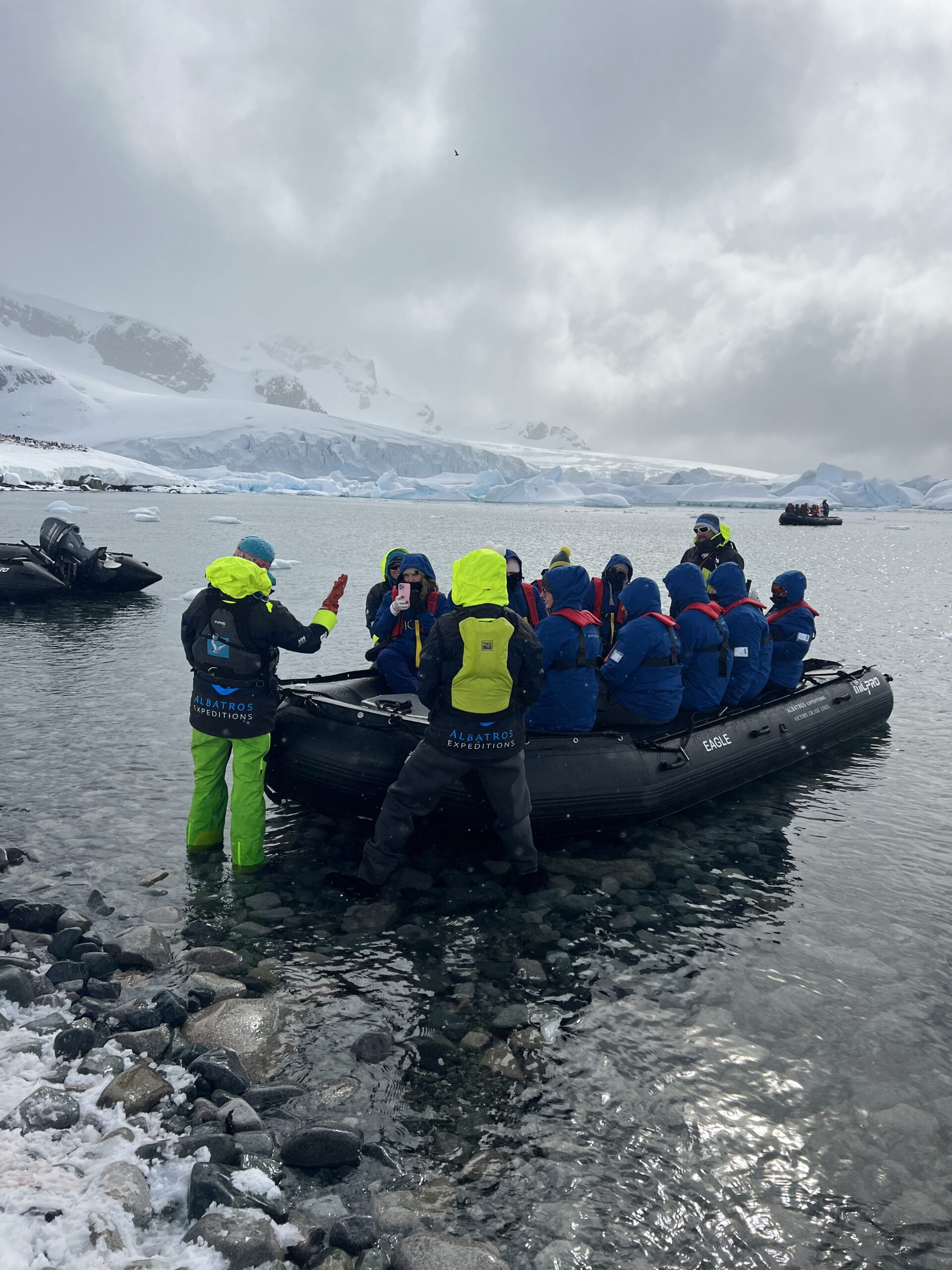
The decision to become an Antarctic Ambassador was not one I made lightly. As a passionate advocate for sustainable travel, I knew that exploring such a pristine and delicate ecosystem came with an immense responsibility. One of the most eye-opening experiences I had during this trip was the careful biosecurity procedures enforced upon our arrival. We were required to go through a thorough biosecurity vacuum to minimize the introduction of invasive species to the continent—a reminder of the delicate balance we must all strike between exploration and preservation. It was a humbling experience that reminded me why I had committed to this cause in the first place.
Life on the ship felt like its own kind of classroom.
With 24 hours of daylight — the true midnight sun — we had to keep the blinds tightly shut just to convince our bodies it was “night.” And every day, we learned something new about the frozen world around us.
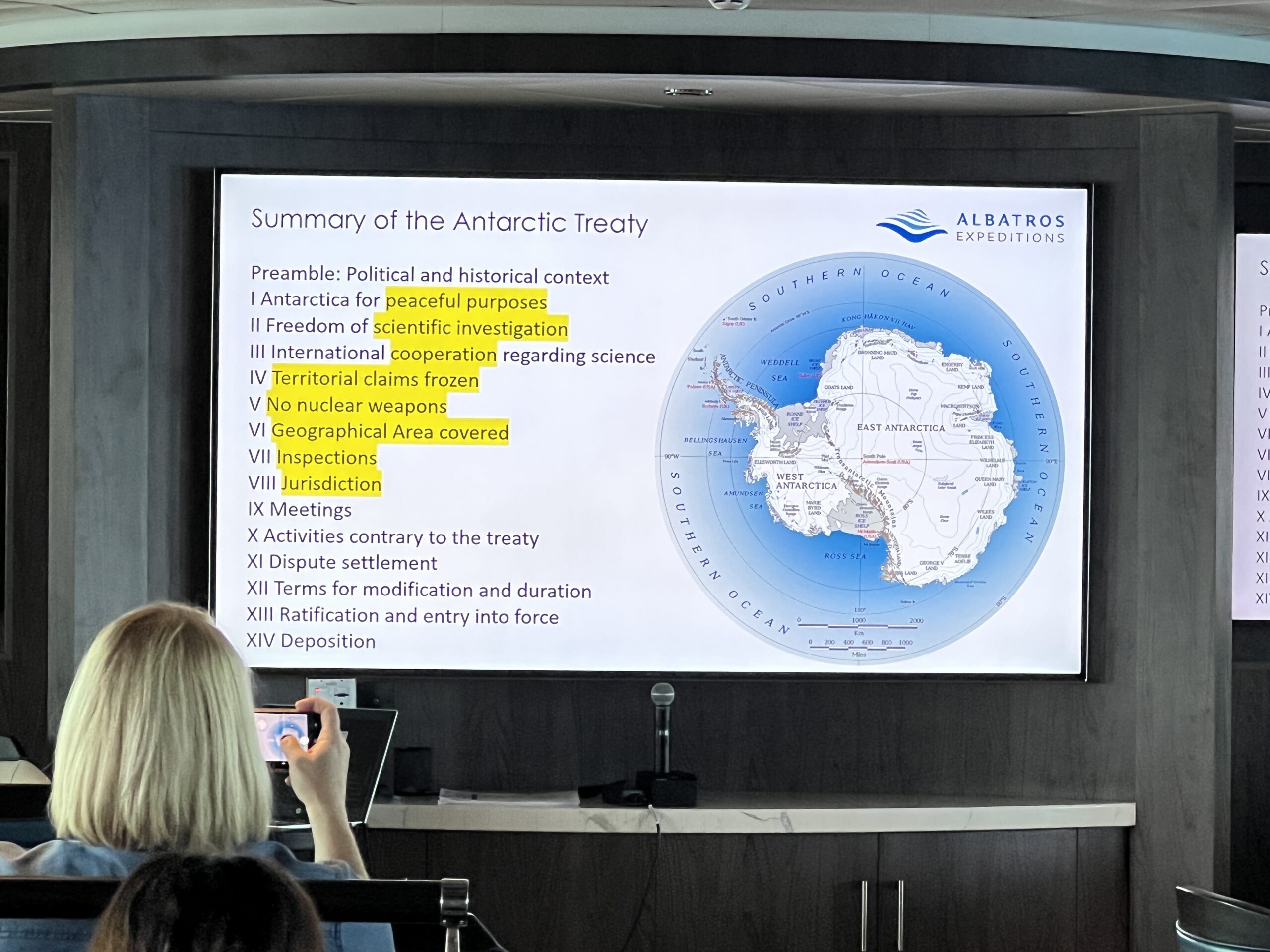
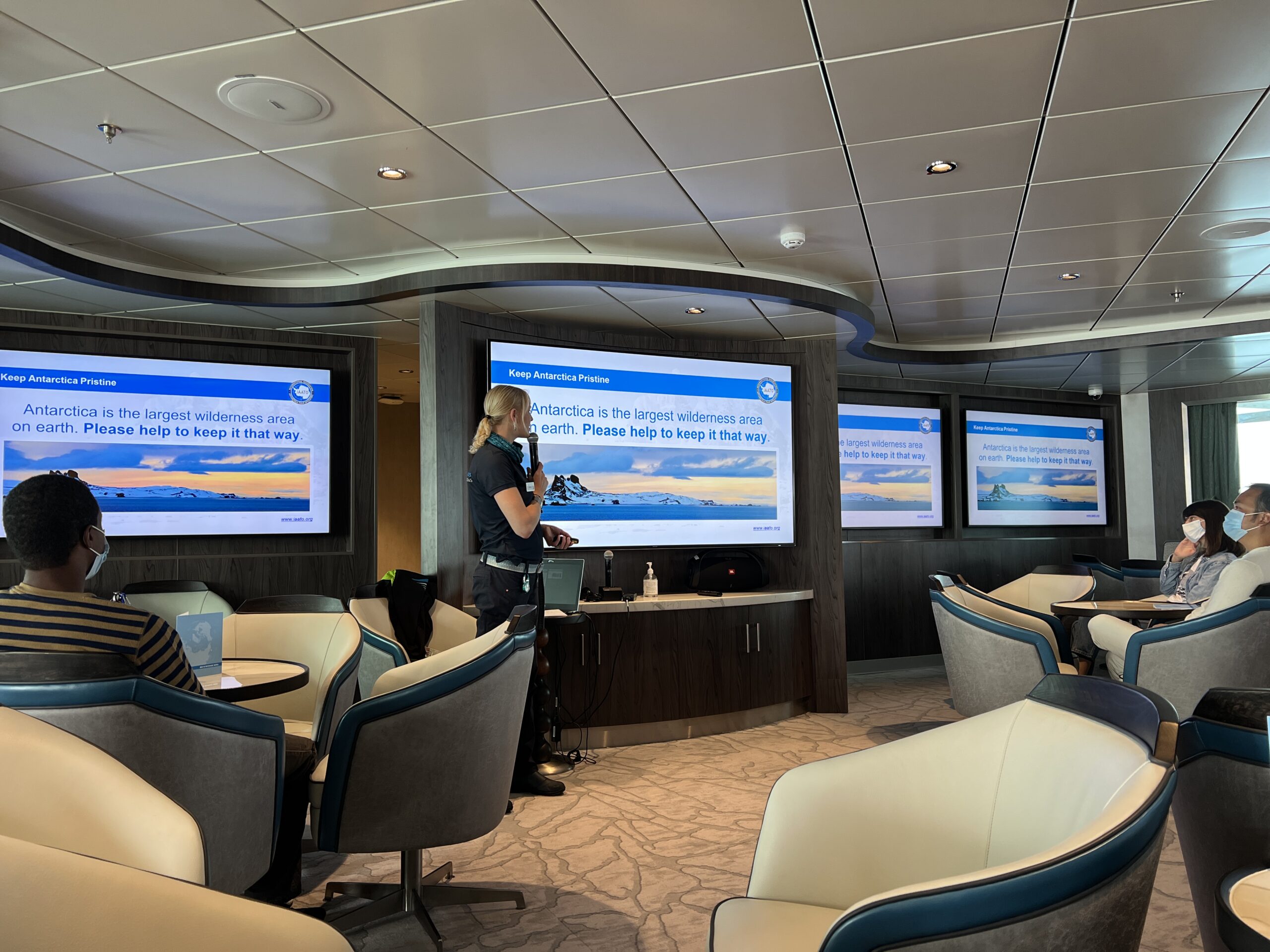
We learned that Antarctica belongs to no one, protected under the 1959 Antarctic Treaty. All research here must be purely scientific — no mining, no resource extraction — and every boat follows strict environmental and safety protocols (this was still peak COVID, so add those on top!).
Before stepping onto land, we scrubbed our boots to avoid carrying a single parasite from one penguin colony to another. Penguins have the right of way, by the way. And apparently, “little rocks are hard to find” because penguins will steal them to impress their mates… sometimes aggressively.
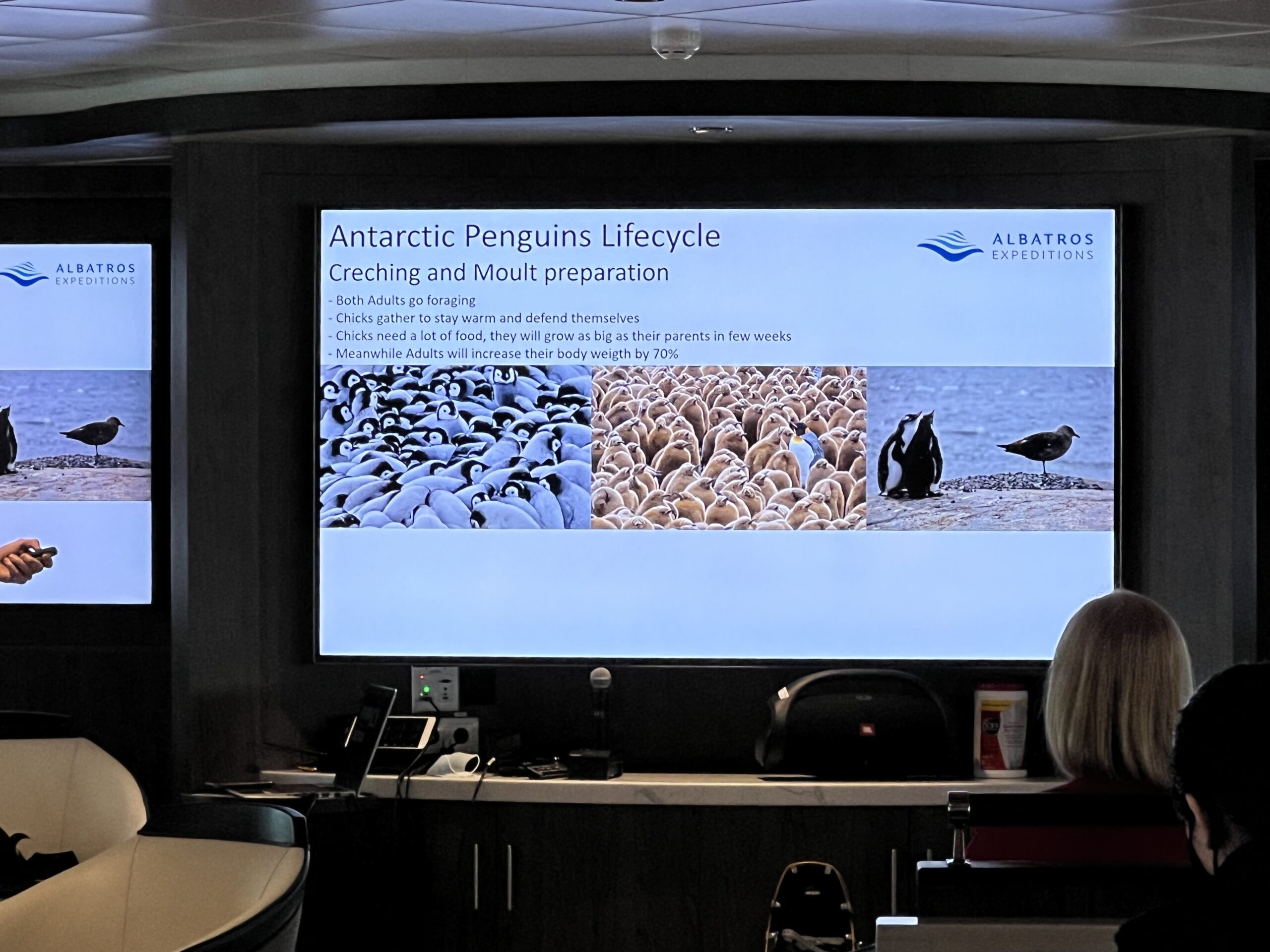
We learned that penguins may even sing to their eggs so the chick recognizes their voices. And that penguins mating in summer isn’t normal — they’re trying to build nests, but the unusually heavy snow has thrown their timing off.
We heard from an ornithologist who adored seabirds more than anyone I’ve ever met. He taught us that some seabirds can sleep while flying, that a cluster of them often means a whale is nearby, and that certain species can smell a carcass from 40 km away.
Life aboard also taught us about people — the camaraderie among ships here is unlike anywhere else. In these harsh conditions, crews share food, tools, and whatever resources another vessel might be missing. Even the seafood onboard was sustainably sourced, because everything here demands respect.
Every lesson was a reminder of how fragile this place is — and how much responsibility we have to protect it.
A World of Numbers
Onboard, we tracked the daily consumption of resources with startling precision—meats, seafood, and even toilet paper—reminding us of the sheer amount of goods that sustain such a voyage. For instance, in our two-week journey, we consumed:
- 870 kg of meat
- 450 kg of seafood
- 840 cans of beer
- 570 bottles of wine
- 600 liters of milk
- 450 kg of flour
- 390 rolls of toilet paper
These numbers might seem trivial at first glance, but they were a reminder of the responsibility we all carry in maintaining sustainability, even when embarking on such an extraordinary journey. As we approached the final days, this accountability deepened as we reflected on the legacy we hoped to leave behind.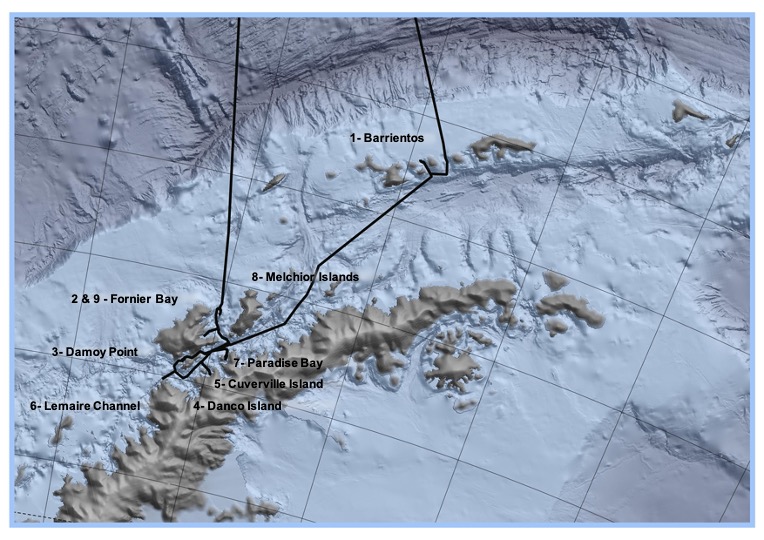
Our Journey
12 December: Aico Islands – The Heart of the Shetlands
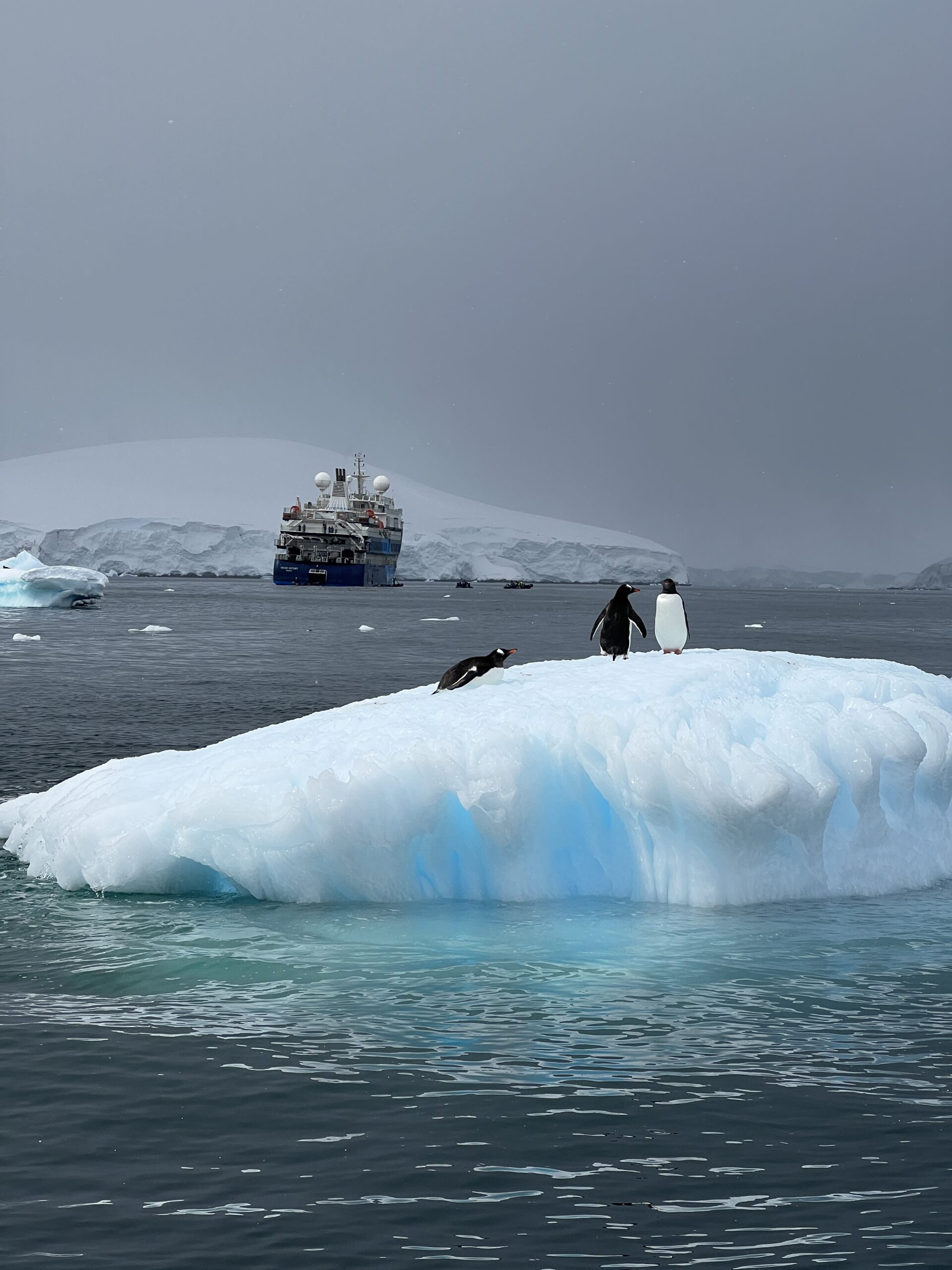
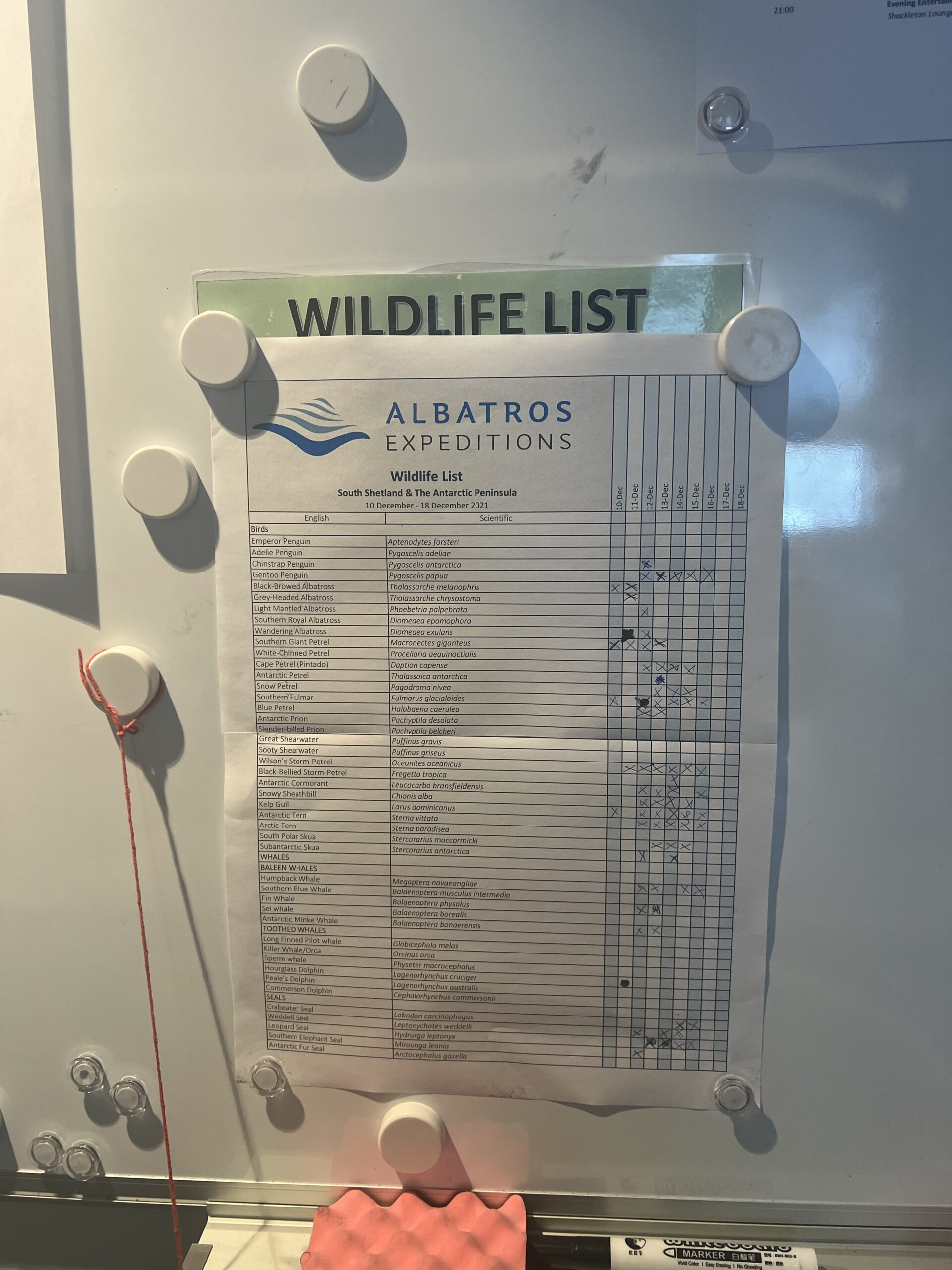
Our adventure began on the 12th of December, with a landing at the Aico Islands, a part of the Shetland Islands that stretches from east to west. Our Zodiac boats brought us to the small islet of Barrientos, where we encountered the bustling life of chinstrap and gentoo penguins. The penguins, many of which were sitting on their eggs, appeared undisturbed by our presence, but we remained vigilant, making sure not to cause them stress.
Their slightly orange beaks, an identifying trait of the gentoo penguin, stood out against the snowy backdrop. It was a moment of deep connection with nature—an immersion into the life cycles of these incredible creatures and a reminder of why such places need to be protected at all costs.
13 December: A Day of Firsts in Antarctica
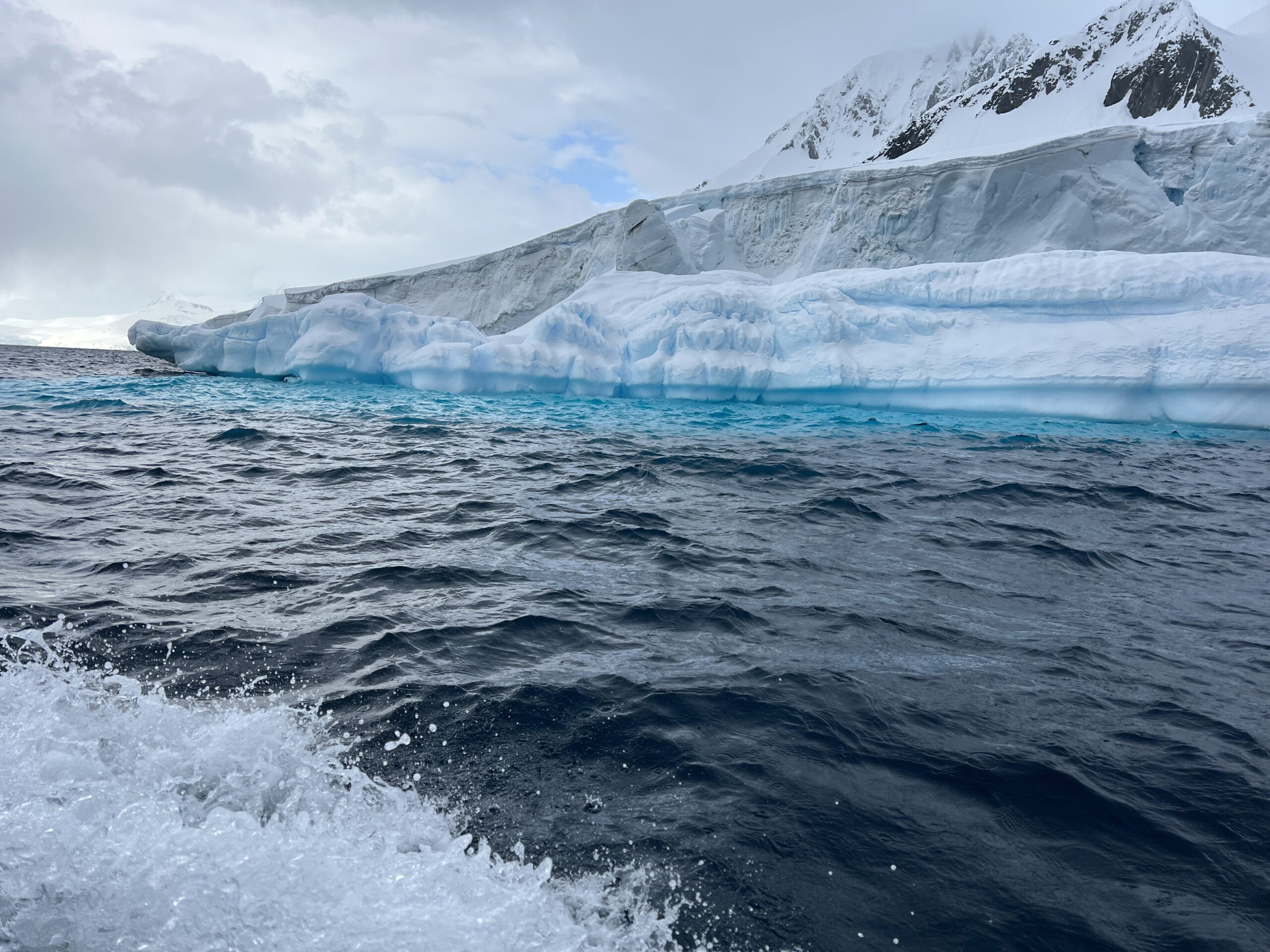
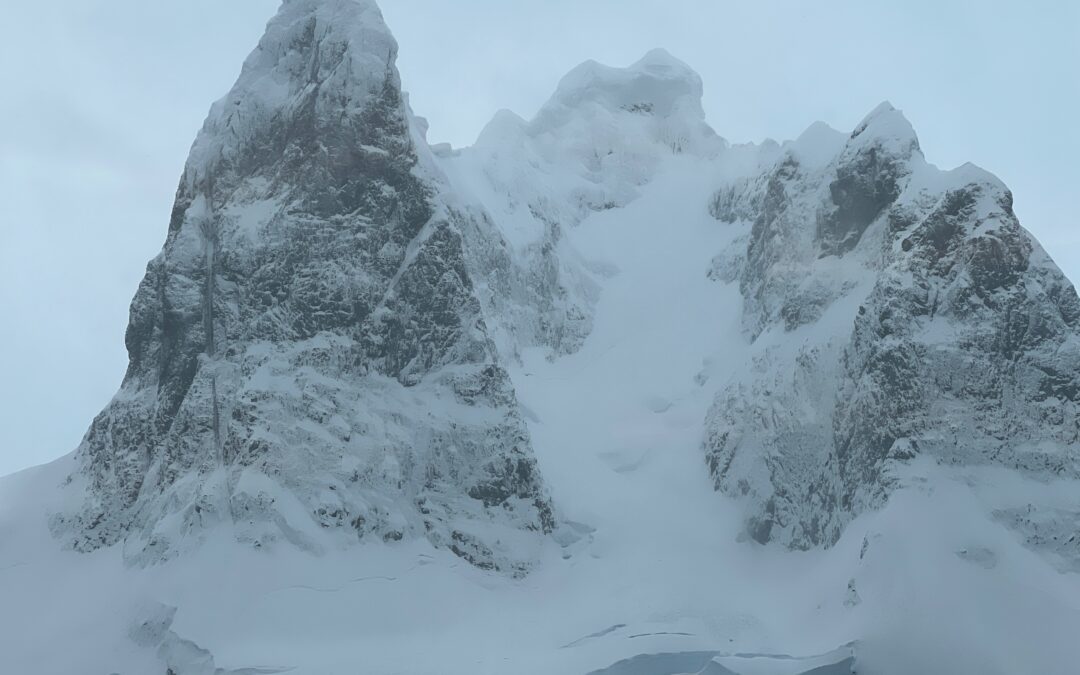
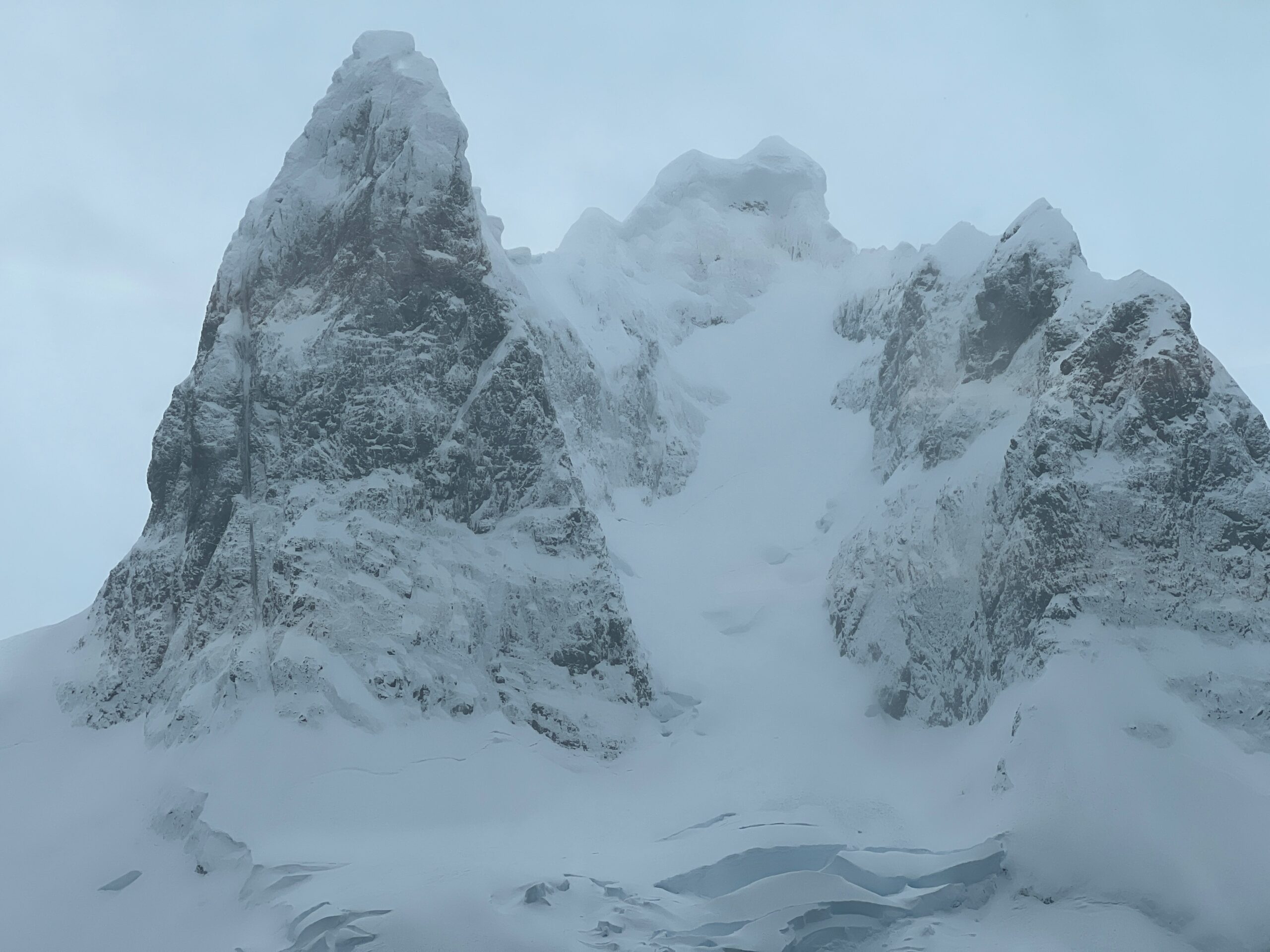
The following day, we arrived at Fournier Bay, our first full day in Antarctica. The icy landscape stretched endlessly before us—glaciers towering over icebergs that glided silently through the bay, their jagged edges catching the early light. As we boarded our Zodiacs and set out, it felt like we were venturing into a world untouched by time.
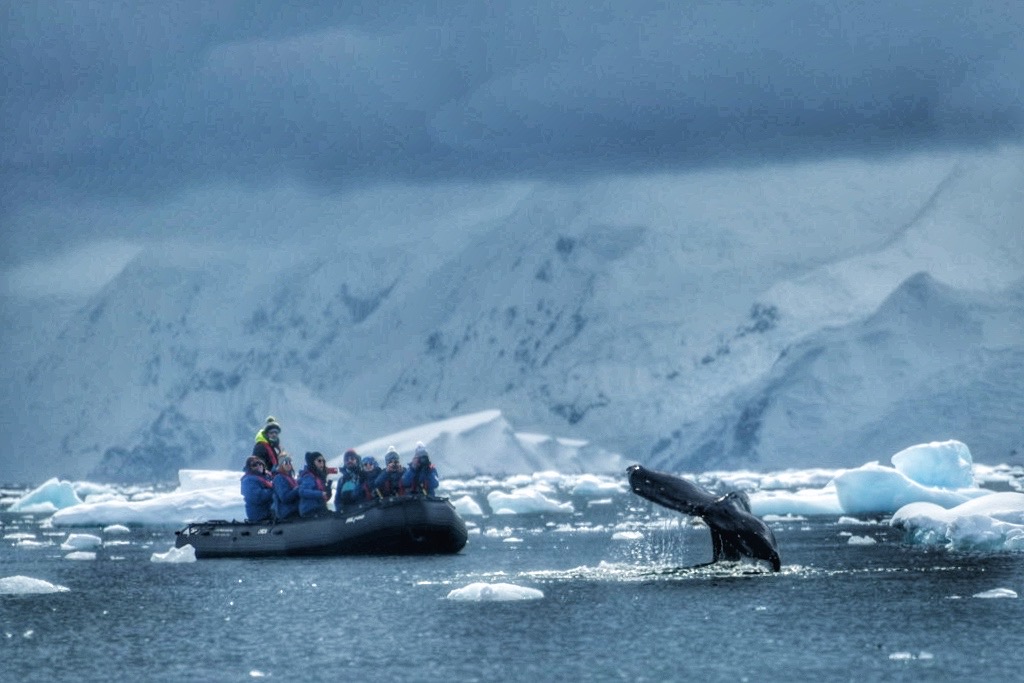
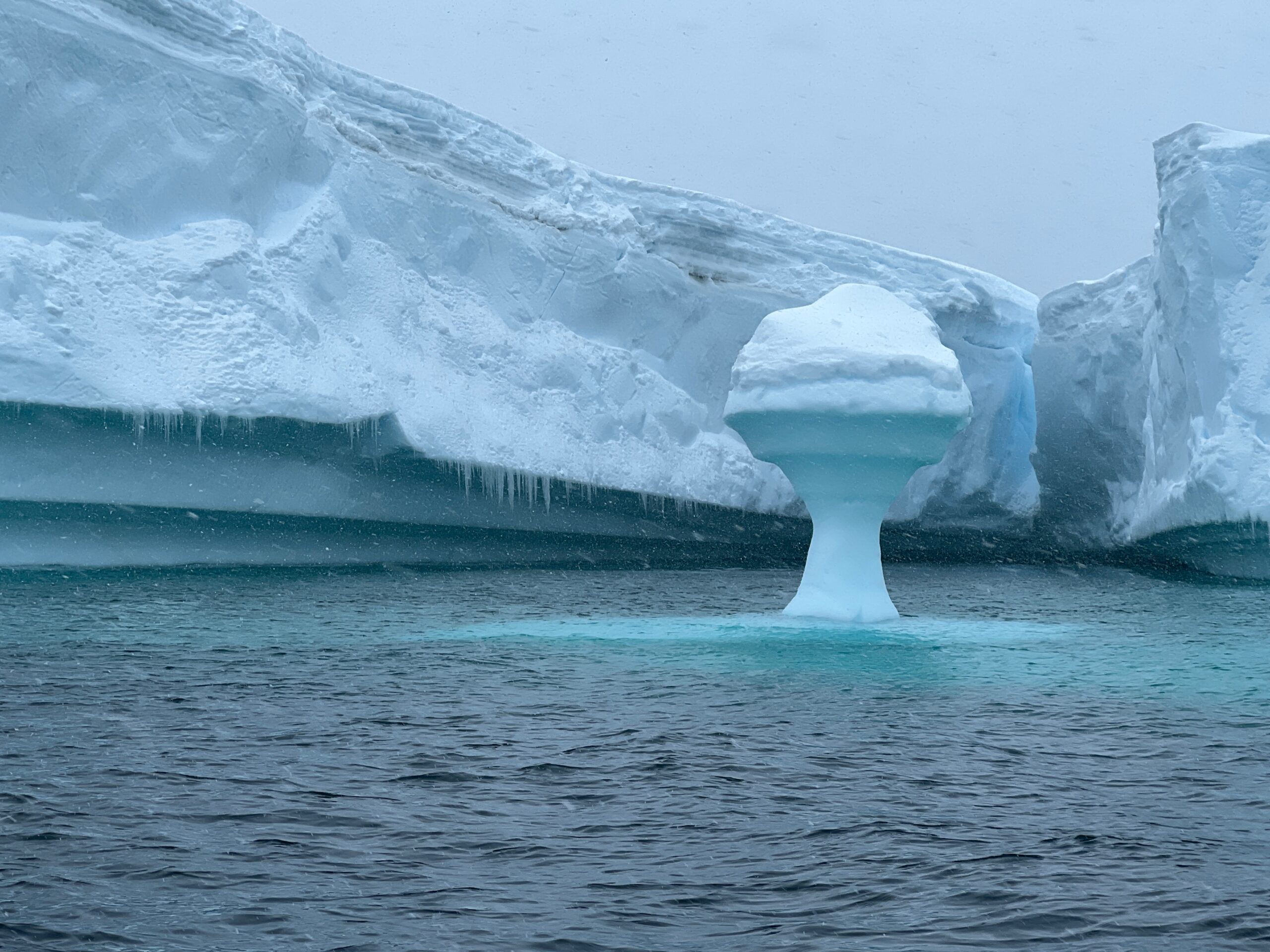
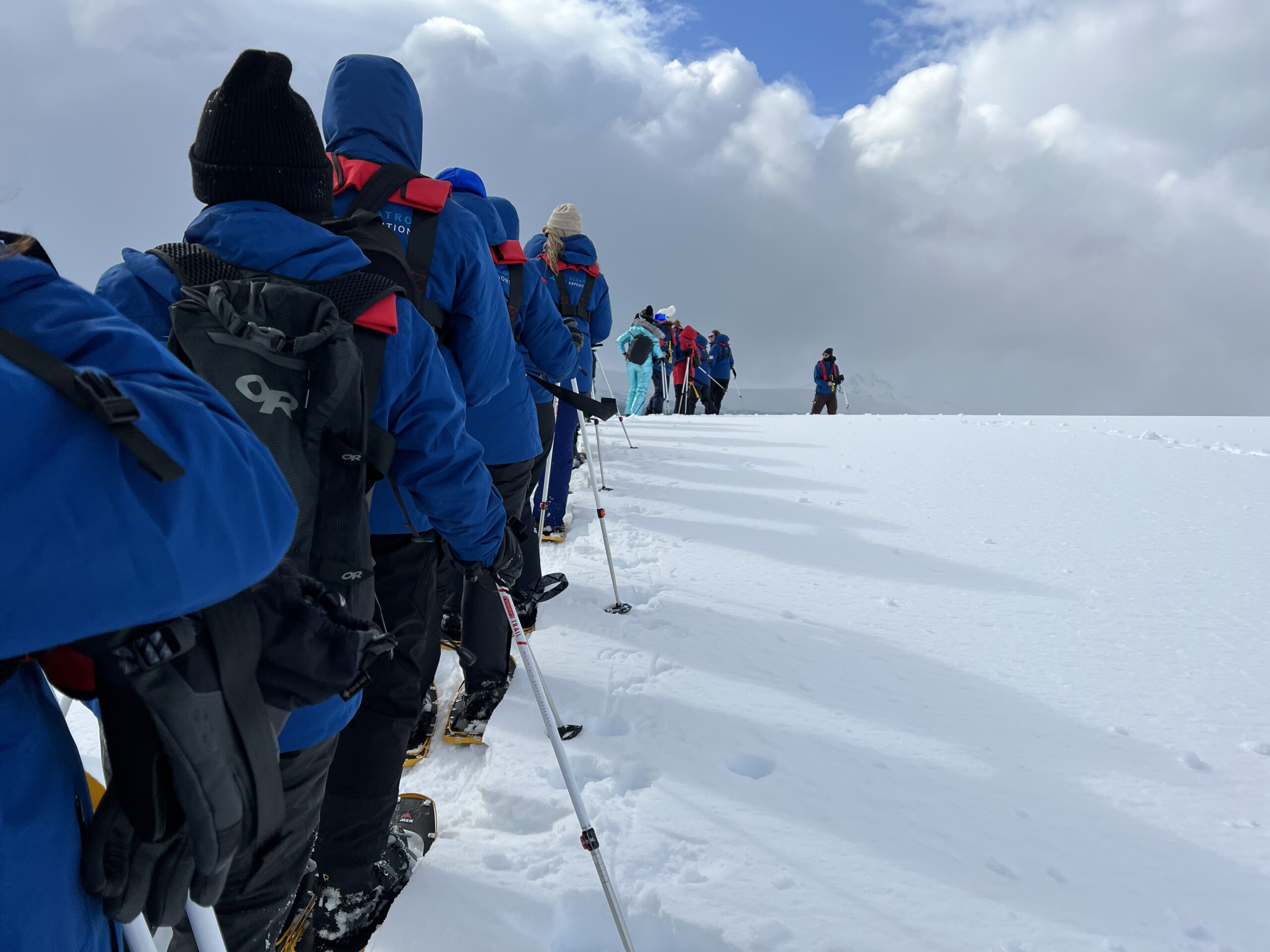
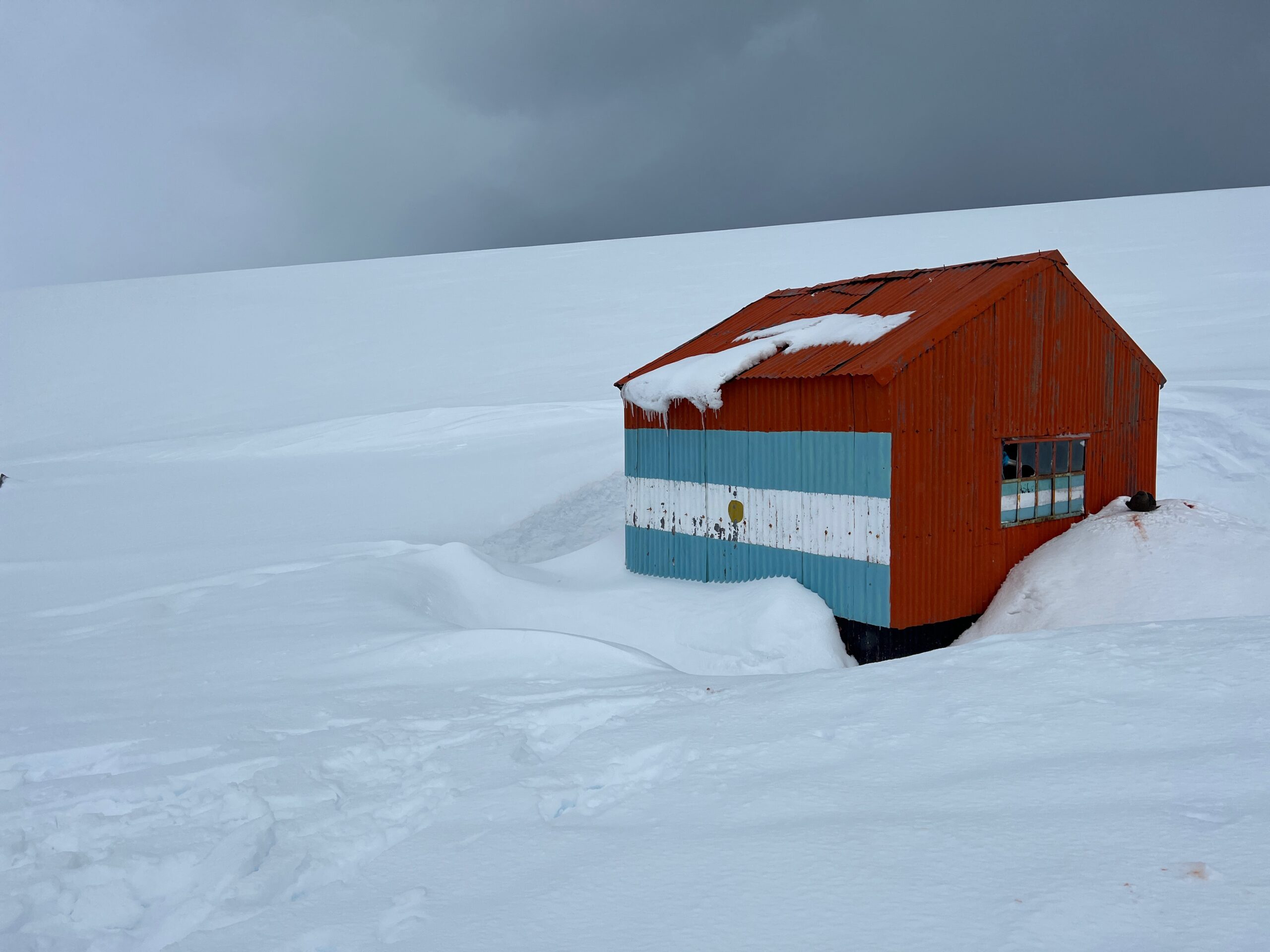
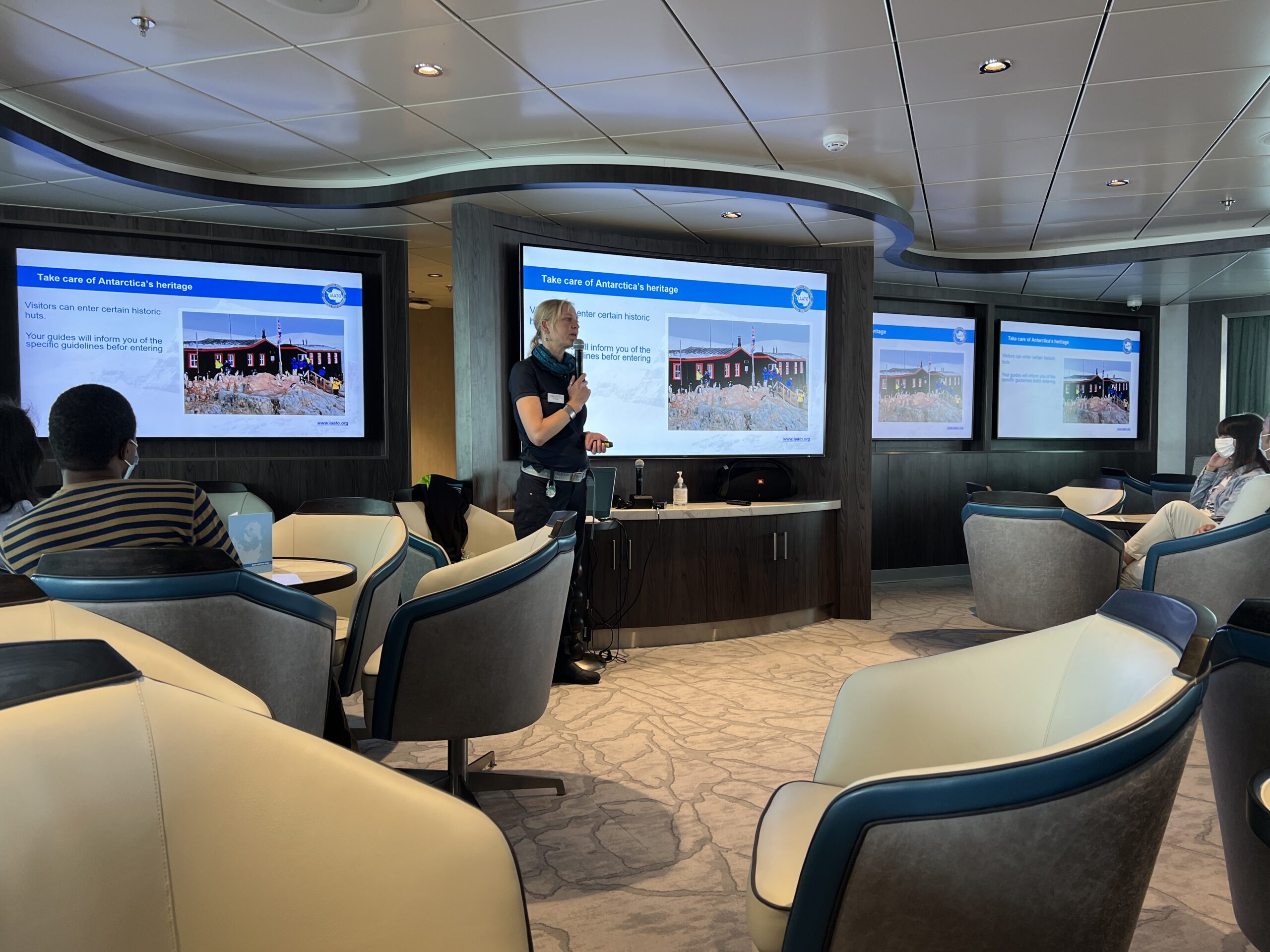
We had no idea what lay ahead—whether we would witness our first encounters with cetaceans, discover ice sculptures beyond anything manmade, or simply absorb the profound stillness of a landscape where the only sounds are the crashing of waves against ice and the occasional rumble from glaciers shifting around us. Some of us hiked to the old British and Argentinian research stations, where our expedition team had worked tirelessly to clear paths and flag our route.
The wind whipped fiercely, but we pressed on, finally understanding just how powerful and unpredictable this land can be. As we wandered, we encountered gentoos swimming through the icy waters, while their partners remained behind, guarding their eggs on the shore. The sense of tranquility here was absolute, and we felt a true connection to this wild and unforgiving land.
14 December: Danco Island and Cuverville
Danco Island and Cuverville Island brought us even deeper into the heart of Antarctic wildlife. The penguins here were truly in their element. We watched as they struggled through thick snow to reach their nests, their belly-slide technique mimicked by our own “blue-coated” passengers who couldn’t help but feel a little envious.
At this time of year, many of the penguins were still mating—a rare sight for us so late in the summer. This delay in their seasonal cycle was likely a result of the heavier-than-usual snow and ice, possibly due to the ongoing effects of climate change. It was a sobering thought, watching these ancient creatures struggling to adapt to a changing environment.
15 December: Lemaire Channel and the First Continental Landing
On the 15th of December, we had our first—and only—continental landing at Brown Base. The excitement was palpable as we boarded Zodiacs and made our way to the tiny beach, just big enough for two boats. This was Antarctica—the 7th continent, and our arrival marked a personal milestone.
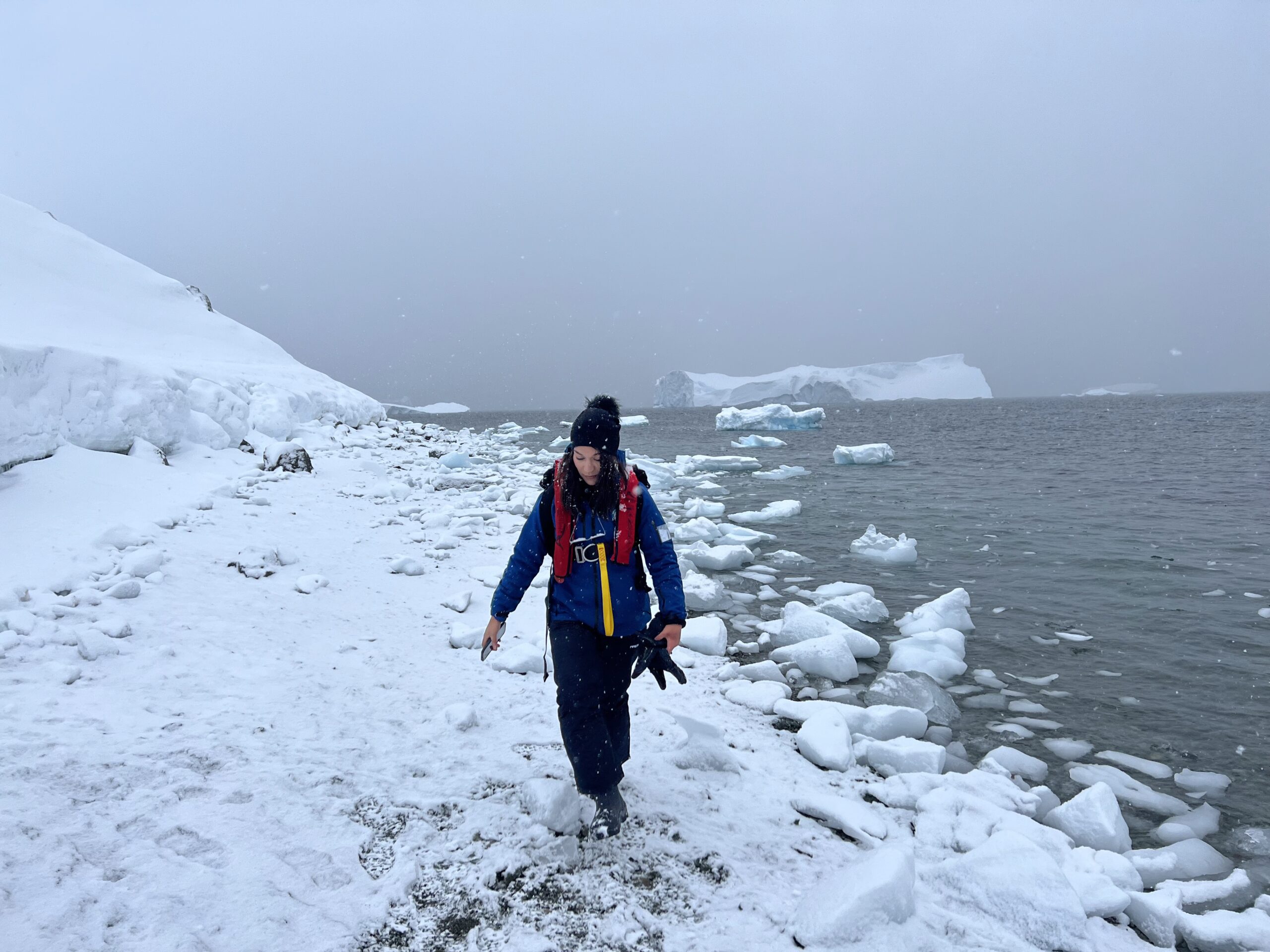
As we stood on that small stretch of beach, we marveled at the icebergs and glaciers surrounding us. We knew that the tide would soon start to encroach on our landing site, reminding us once again of the ever-changing nature of this wild land. Our group returned to the Zodiacs for a short cruise, getting up close to the icebergs that loomed like ancient sentinels over the landscape.
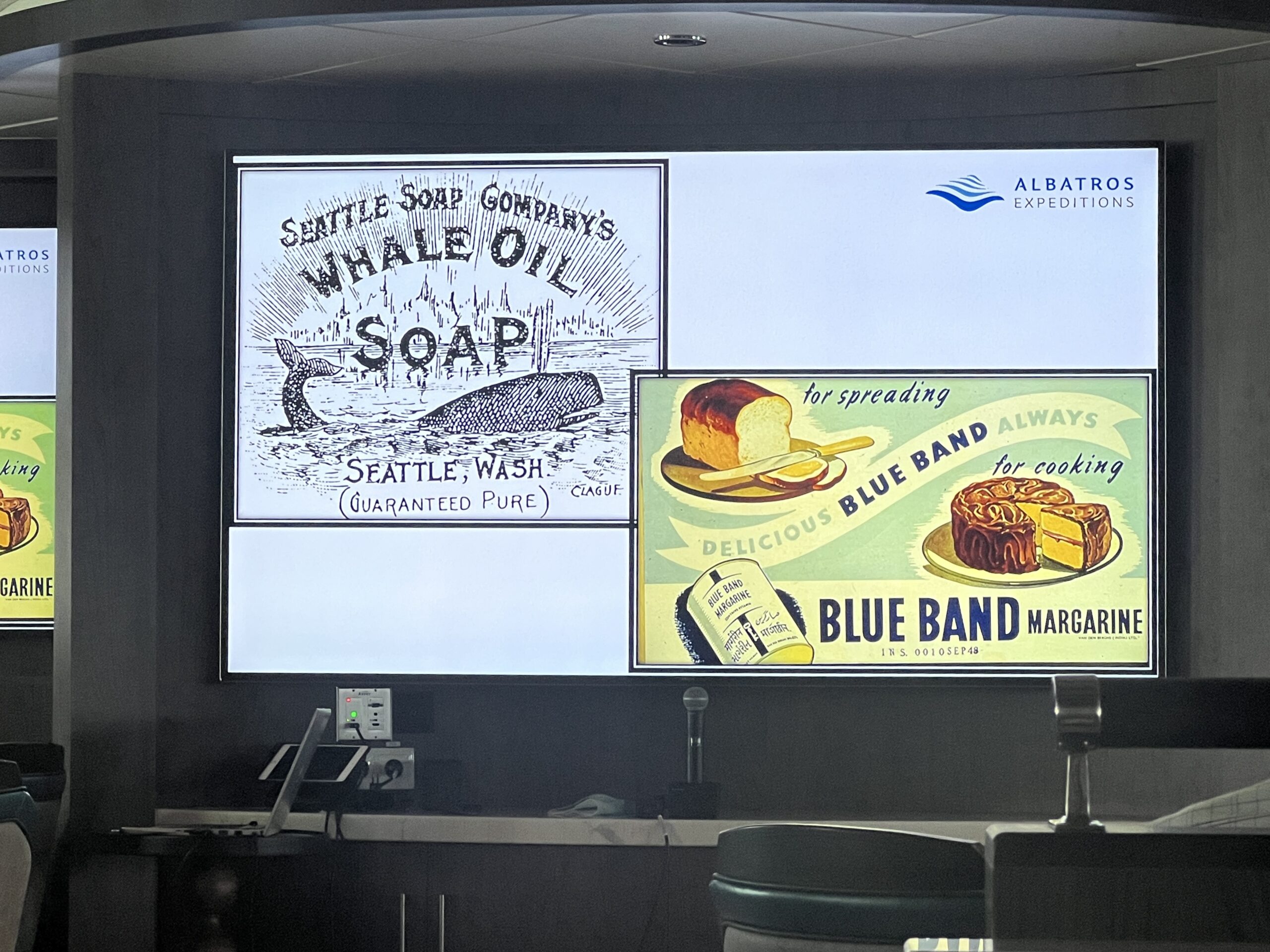
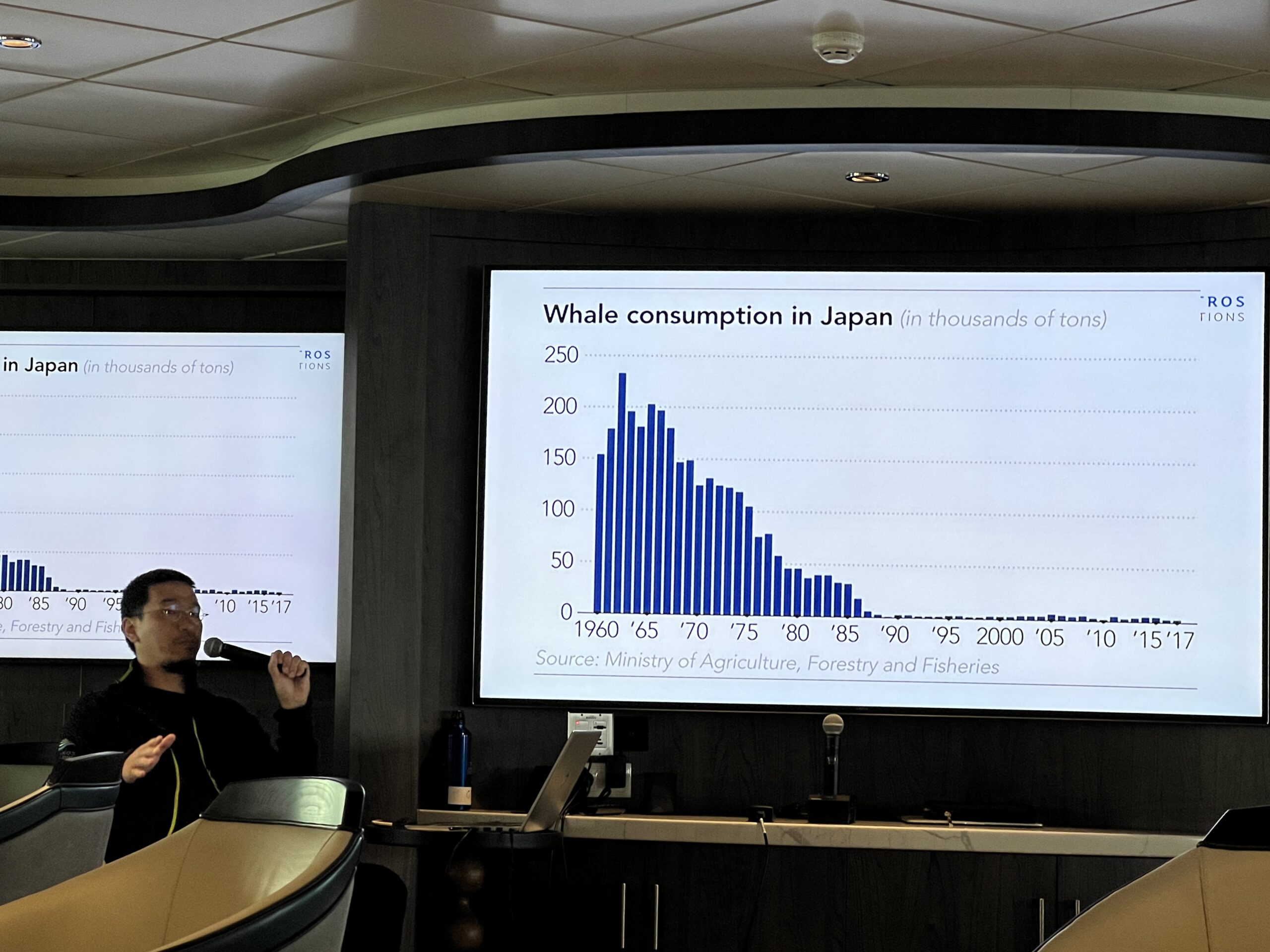
Later, Sanne, one of our expedition leaders, gave an enlightening lecture on whales and their incredible role in the Antarctic ecosystem, while Mariam filled us in on the research conducted at the Argentinian Antarctic research base. It was a fascinating day of learning and discovery.
16 December: The Thrill of Kayaking and the Drake Passage
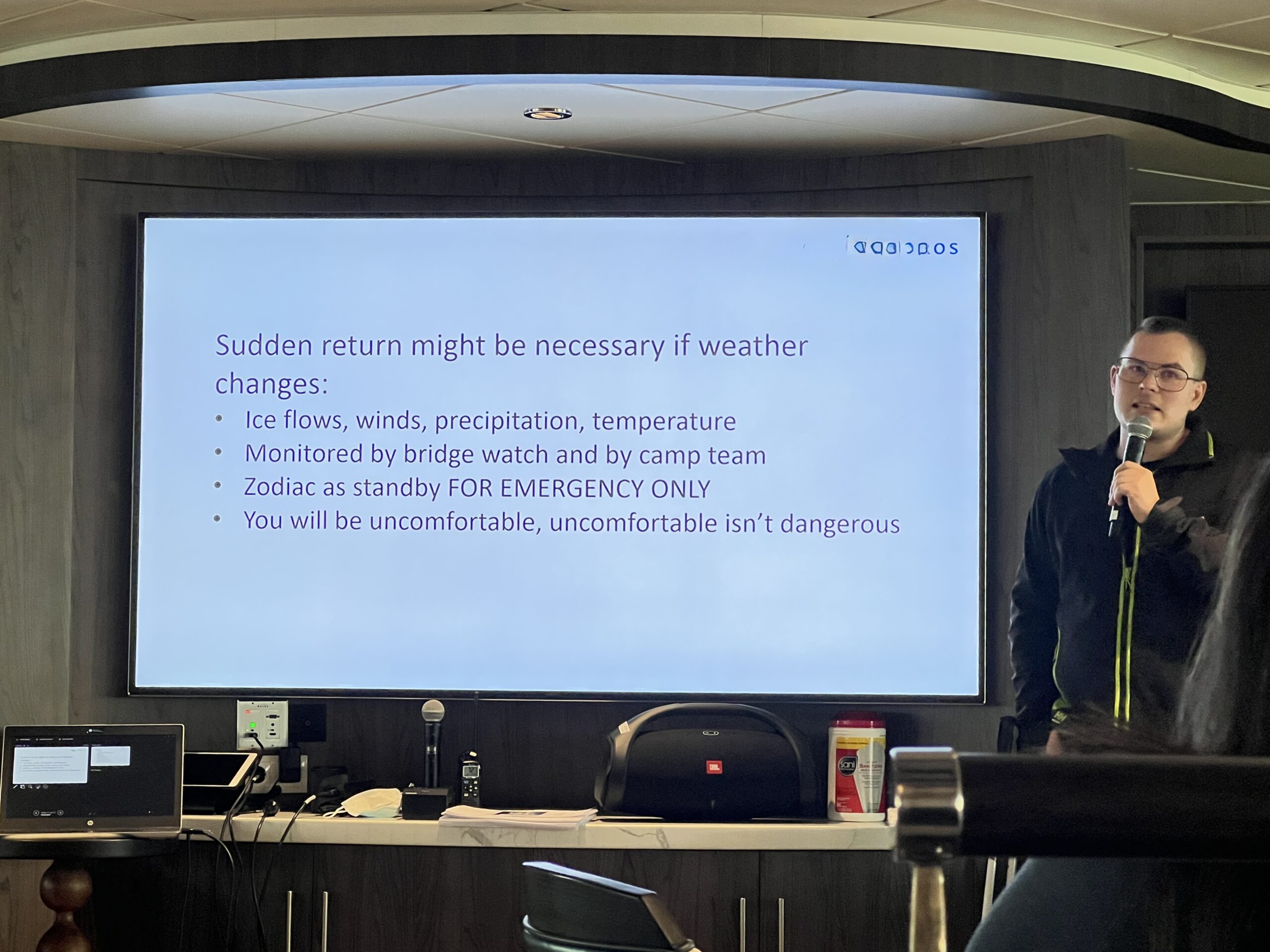
On our final day of Antarctic operations, conditions had shifted dramatically. Stormy seas and 50-knot winds forced us to cancel our planned activities. In a true testament to the unpredictability of expedition travel, the Captain altered course and took us back to Fournier Bay—where we had started. In fact, the difference between an expedition (one like this) and a cruise is that a cruise usually has a set, unaltered path, but an expedition is exclusively reliant on external conditions, so the places we were able to venture to were volatile and changing every day.
As the wind began to calm, a small group of kayakers was given the chance to paddle through sheltered waters, surrounded by ice and steep mountains.
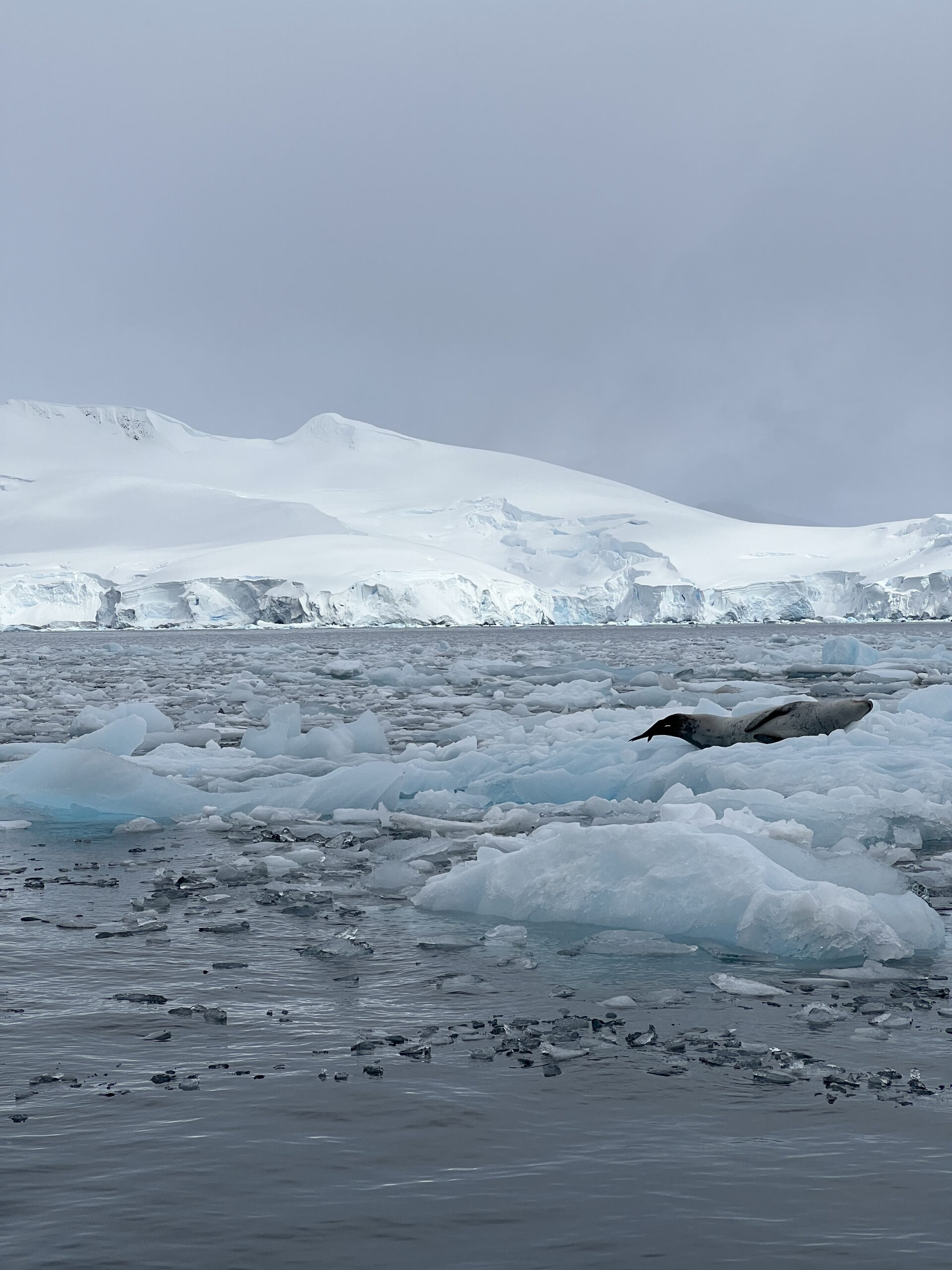
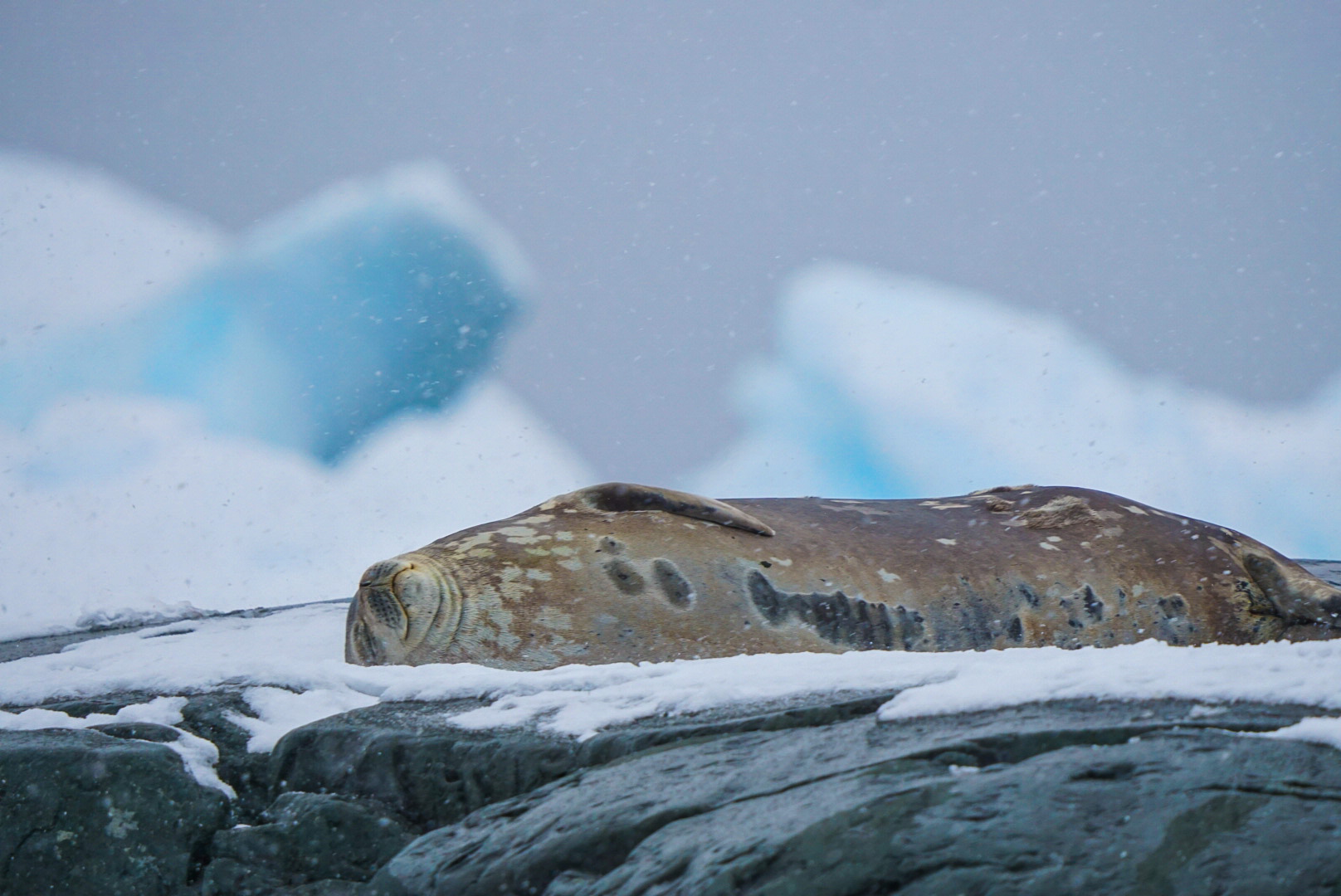
The silence on the water was profound. As we paddled through glacial fjords, with Gentoo penguins swimming around and Weddell seals lounging on the ice, I couldn’t help but feel a deep sense of gratitude for this experience. This was why we had come—to experience nature in its purest form, and to witness how even the most remote places are connected to the global health of our planet.
The Drake Passage and the Return Journey
As we left Antarctica behind, we sailed into the Drake Passage, a notorious stretch of ocean known for its fierce storms. By the afternoon, the storm had settled in full force, and many passengers retreated to their cabins to wait it out. Those of us who remained in the observation lounge were mesmerized by the towering waves crashing against the ship, but despite the tumultuous seas, the M/V Ocean Victory held steady, cutting through the waves with impressive strength.
It was a fitting end to a journey that had tested us, humbled us, and left us in awe of the natural world. We spent the remaining days of the voyage discussing the creatures and ecosystems we had encountered, from the tiny krill that sustain the Southern Ocean to the strange and unimaginable creatures that live in the depths of the Antarctic waters.
Reflection: The Journey’s End
By the time we entered the Beagle Channel on the 18th of December, we were all different. The sense of camaraderie and shared experience had transformed us. We had become witnesses to a world that few people ever see—a place where every step is a reminder of the delicate balance we must maintain between human progress and environmental preservation.
On the 19th, we disembarked, leaving behind the frozen world of Antarctica but carrying with us the knowledge that our journey had only just begun. As an Antarctic Ambassador, I knew I had a role to play in advocating for the protection of these fragile ecosystems—and, perhaps most importantly, in spreading the message that sustainable travel is not just a choice but a responsibility.
Closing Thoughts:
This journey was more than a simple vacation. It was an immersion into a place that is both wildly beautiful and deeply fragile. As I look back on those days—spending time with penguins, kayaking amidst glaciers, and reflecting on the critical role whales play in the Southern Ocean ecosystem—I am reminded of why I embarked on this journey in the first place: to learn, to grow, and to carry the message of sustainability forward.